What Do Car Detailers Use to Clean Your Leather Seats
Car detailers use specialized leather seat cleaners, pH-balanced formulas, and conditioning treatments to keep your leather seats looking great. They rely on microfiber cloths, soft-bristle brushes, and steam cleaners to lift dirt without damaging the material. Learning what car detailers use to clean leather seats helps you achieve professional results at home and protect your investment for years to come.
Key Takeaways
- pH-balanced leather cleaners are the foundation of any car detailers clean leather seats routine and prevent drying or cracking.
- Microfiber cloths and soft detailing brushes are essential tools that detailers rely on for safe, effective cleaning.
- Leather conditioner restores moisture and creates a protective barrier after every cleaning session.
- Steam cleaning is a powerful method detailers use to deep clean leather without harsh chemicals.
- Avoiding household cleaners like dish soap or all-purpose sprays is one of the biggest mistakes car owners make.
- Regular maintenance with the right products keeps leather seats looking new for a decade or more.
- Professional-grade tools like air compressors and leather sewing needles are used for serious restoration work.
What Do Car Detailers Use to Clean Leather Seats?
You love your leather seats. They look sleek, feel luxurious, and add real value to your car. But over time, crumbs, spills, and everyday wear take a toll. You start wondering how professional detailers keep leather seats looking so flawless.
The truth is, car detailers clean leather seats using a specific set of products and tools designed for automotive leather. They do not just grab whatever is under the sink. Every product they choose serves a purpose. Every step in their process protects the material.
In this guide, we break down exactly what car detailers use. You will learn about the cleaners, conditioners, brushes, and techniques that professionals trust. By the end, you will know how to give your leather seats the same level of care they would receive at a premium detailing shop.
Whether you are a car enthusiast or just someone who wants to keep their ride looking sharp, this guide has you covered. Let us dive into the world of automotive leather care and find out what really works.
Why Leather Seats Need Special Care
Leather is a natural material. It is porous, sensitive, and vulnerable to damage if treated incorrectly. Unlike fabric seats, leather can crack, fade, and dry out over time. Regular vacuuming is not enough to keep it in top shape.
Car detailers understand this. They know that leather seat maintenance requires a gentle but effective approach. The right products clean without stripping natural oils. The wrong products can cause irreversible damage. This is why professionals use pH balanced leather cleaner formulas specifically designed for automotive interiors.
Temperature changes, UV rays, and daily use all stress leather seats. A proper cleaning routine addresses these challenges head-on. It keeps the material supple, prevents premature aging, and preserves that rich, deep color your car came with.
The Top Products Car Detailers Reach For
When a detailer walks into a garage, they have a go-to lineup of products. These are not random picks. Each product plays a specific role in the cleaning and protection process. Here is what you will find in almost every professional detailer’s toolkit.
Leather Seat Cleaner
The first product any detailer reaches for is a dedicated leather seat cleaner. These cleaners are formulated to lift dirt, grime, and stains from leather without damaging the surface. They are different from all-purpose cleaners in a major way.
Leather cleaner for cars uses gentle surfactants that break down contaminants without stripping the leather’s natural oils. Popular brands among professionals include Chemical Guys, Meguiar’s, and Koch Chemie. These products are tested specifically on automotive leather and deliver consistent results.
When choosing a cleaner, look for one that is pH balanced. This ensures the product matches the natural pH of leather. A pH balanced formula cleans effectively while keeping the material healthy and strong.
Leather Conditioner
Cleaning is only half the battle. After removing dirt and stains, detailers always apply a leather conditioner. Conditioner replenishes moisture that cleaning removes. It also creates a protective layer that shields against future damage.
Good conditioners contain natural oils and waxes that soak deep into the leather fibers. This keeps the seats soft and supple. Without conditioning, leather can become stiff and eventually crack. No one wants cracked leather seats in their car.
Detailers often use conditioners with UV protection built in. This adds an extra layer of defense against sun damage. Sun exposure is one of the biggest enemies of leather interiors. A quality conditioner fights back every time.
Leather Protectant and Sealant
For extra defense, many detailers apply a leather protectant or sealant after conditioning. These products create an invisible barrier on the surface. They repel water, resist stains, and make future cleaning much easier.
Think of it like waxing your car, but for the interior. The protectant fills in tiny pores on the leather surface. This reduces the chance of spills soaking in and causing stains. It is a smart step that extends the life of your seats significantly.
Tools of the Trade
Products alone are not enough. Car detailers use specialized tools to apply and work those products effectively. The right tools make the difference between a good result and a great one.
Microfiber Cloths
Microfiber cloths are the backbone of any car interior cleaning routine. Detailers use them for wiping, buffing, and applying products evenly. Unlike regular towels, microfiber is gentle on leather and leaves no lint behind.
Professionals keep multiple microfiber cloths on hand. They use one for applying cleaner, another for wiping it off, and a third for buffing in conditioner. This separation prevents cross-contamination and gives a cleaner, more polished result.
Soft-Bristle Detailing Brushes
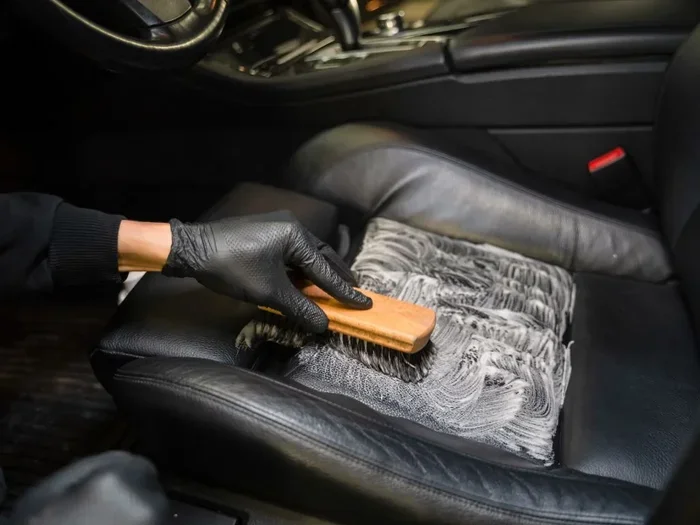
Stains and dirt settle into the seams and creases of leather seats. A detailing brush with soft bristles is perfect for loosening grime from these hard-to-reach areas. Detailers use brushes with nylon or natural hair bristles that are firm enough to scrub but soft enough not to scratch.
When you brush leather seats, use gentle circular motions. This lifts dirt to the surface where it can be wiped away. Never press too hard. Excessive pressure can wear down the leather finish over time.
Steam Cleaners
Steam cleaning has become a staple in modern interior car detailing. A handheld steam cleaner uses hot water vapor to deep clean leather without chemicals. The heat loosens dirt and kills bacteria at the same time.
Detailers love steam cleaners because they are chemical-free. You get a deep leather seat deep clean without worrying about residue or harsh fumes. Just make sure to use a low-pressure setting. High pressure can force water into the leather and cause damage.
Air Compressors and Vacuum Systems
Before any cleaning begins, detailers remove loose dirt and debris. They use powerful vacuum systems and air compressors to blow out dust from seams, vents, and crevices. This step is often overlooked by DIY cleaners, but it is essential for a thorough job.
Removing loose particles first prevents them from becoming abrasive during the cleaning process. It also ensures that your cleaner and conditioner penetrate the leather evenly, rather than getting blocked by trapped dirt.
Step-by-Step: How Detailers Clean Leather Seats
Now that you know the products and tools, let us walk through the actual process. Detailers follow a systematic approach to get the best results every time. You can follow these same steps at home.
Step 1: Vacuum Thoroughly
Start by vacuuming all the leather surfaces. Use the brush attachment to lift dirt from the seat surfaces, sides, and seams. Then use the crevice tool to get into tight spaces. Do not forget the areas between seats and along the center console.
Step 2: Apply Leather Cleaner
Spray a quality leather cleaner onto a microfiber cloth, not directly onto the seat. This gives you more control and prevents oversaturation. Work in small sections, wiping in gentle circular motions. For stubborn stains, use a soft detailing brush to agitate the area lightly.
Step 3: Wipe and Rinse
After cleaning each section, use a clean, damp microfiber cloth to wipe away any residue. This step is important because leftover cleaner can leave a sticky film. Go over the entire seat surface until no residue remains.
Step 4: Dry Completely
Let the seats air dry completely before moving to the next step. You can speed this up with a clean, dry microfiber towel. Never use a hair dryer or direct heat. Excessive heat can warp or dry out the leather.
Step 5: Apply Conditioner
Once the seats are dry, apply a leather conditioner using a fresh microfiber cloth. Work in small circles and let the conditioner soak in for a few minutes. Buff off any excess with a clean cloth. The leather should feel soft and look slightly glossy.
Step 6: Apply Protectant (Optional)
For an extra layer of protection, apply a leather sealant or protectant. This step is especially helpful if you park your car outdoors or live in a sunny climate. The protectant adds a barrier against UV rays, spills, and everyday wear.
Common Mistakes to Avoid
Even with the best products, mistakes can happen. Here are the most common errors people make when cleaning leather seats. Avoid these and your seats will thank you.
Using household cleaners. Dish soap, all-purpose sprays, and window cleaners are too harsh for leather. They strip away natural oils and can cause cracking over time. Always use a cleaner designed specifically for automotive leather.
Skipping the conditioner. Some people clean their leather seats and forget to condition them. This leaves the leather dry and vulnerable. Always condition after every cleaning session to maintain moisture and flexibility.
Using too much product. More is not better when it comes to leather care. Over-saturating the seats can cause product buildup. It can also allow moisture to seep into the leather padding, leading to mold and mildew.
Ignoring the seams and creases. Dirt loves to hide in the stitching and creases of leather seats. If you only clean the flat surfaces, grime will accumulate in the hidden areas and eventually cause damage.
Skipping regular maintenance. Leather seat care is not a one-time job. It requires regular attention. A quick wipe-down once a week and a deep clean once a month will keep your seats in excellent condition year-round.
Expert Insights on Leather Seat Care
Professional detailers have years of experience working with leather interiors. Here are some insider tips that can elevate your leather seat care routine to the next level.
Test any new product on a hidden area first. Before you apply a cleaner or conditioner to the entire seat, test it on a small, inconspicuous spot. This ensures the product does not discolor or damage your specific leather type.
Invest in a quality leather repair kit. Even with the best care, leather can develop minor scratches or scuffs over time. A repair kit with touch-up dye and filler allows you to fix small issues before they become big problems.
Consider ceramic leather coatings. Some detailers now apply ceramic coatings to leather seats. These coatings create a semi-permanent protective layer that repels water and stains. They are more durable than traditional protectants and last for months.
Do not underestimate the power of regular vacuuming. Most damage to leather comes from trapped dirt particles that act like sandpaper during use. Vacuuming your seats once a week removes these particles before they can cause wear.
Know your leather type. Not all leather is the same. Aniline leather, semi-aniline leather, and coated leather each require slightly different care approaches. Check your vehicle’s manual or ask your dealer about your specific leather type.
How Often Should You Clean Leather Seats?
The frequency of cleaning depends on how you use your car. If you drive daily and often have passengers, your seats will need more attention. If you mostly drive alone and keep the car clean, you can stretch the time between deep cleans.
As a general rule, deep clean your leather seats every four to six weeks. A quick wipe-down with a damp microfiber cloth can be done weekly to remove surface dirt and dust. Conditioning should happen every two to three months, or more often in dry climates.
If you spill something, clean it immediately. The longer a stain sits, the harder it becomes to remove. Blot the spill with a clean cloth and apply a small amount of leather cleaner to the affected area. Do not rub, as this can spread the stain and push it deeper into the leather.
Final Thoughts
Car detailers clean leather seats using a combination of specialized products, professional tools, and a systematic approach. The process is not complicated, but it does require the right materials and a bit of patience. When you follow the steps outlined in this guide, you can achieve results that rival what you would get from a professional shop.
Start with a quality leather seat cleaner and a good leather conditioner. Add the right tools like microfiber cloths and soft brushes. Follow the process step by step. The difference in how your leather seats look and feel will be remarkable.
Remember, leather is an investment. Your car’s interior is one of the first things people notice. Well-maintained leather seats signal care, quality, and pride in your vehicle. Take the time to care for them properly, and they will reward you with years of beauty and comfort.
Now that you know what car detailers use to clean leather seats, you have everything you need to get started. Grab your supplies, roll up your sleeves, and give your leather seats the care they deserve. Your car will look and feel like new again.
Frequently Asked Questions
What is the best leather cleaner for car seats?
The best leather seat cleaner is one that is pH balanced and specifically formulated for automotive use. Look for products from trusted brands like Chemical Guys, Meguiar’s, or Koch Chemie. Always check reviews and test on a small hidden area first to ensure compatibility with your leather type.
Can I use household cleaners on my leather seats?
No, household cleaners like dish soap or all-purpose sprays are too harsh for leather. They strip away natural oils and can cause the leather to dry out, crack, and fade over time. Always use a dedicated leather cleaner for cars to keep your seats in great condition.
How often should I condition my leather seats?
Most car detailers recommend conditioning every two to three months. However, if you live in a dry climate or park your car outdoors frequently, you may need to condition more often. Regular conditioning keeps the leather supple and prevents cracking.
Do I need special tools to clean leather seats?
You do not need expensive equipment, but a few key tools make a big difference. Soft-bristle detailing brushes, microfiber cloths, and a vacuum with a brush attachment are all you need for a thorough clean. A steam cleaner is a nice bonus for deeper cleaning.
Is steam cleaning safe for leather seats?
Yes, steam cleaning is safe when done correctly. Use a low-pressure setting and keep the steam moving constantly. Do not hold the steam nozzle in one spot for too long, as excessive heat and moisture can damage the leather. Always dry the seats thoroughly after steam cleaning.
Can leather seats be restored if they are already cracked?
Minor cracks can often be improved with a quality leather restoration kit that includes filler and color-matching dye. For severe cracking, a professional detailer or leather repair specialist may be needed. Regular maintenance is the best way to prevent cracks from developing in the first place.
=== CONCLUSION ===
What car detailers use to clean leather seats comes down to three things: the right products, the right tools, and a consistent routine. A pH balanced leather cleaner removes dirt safely. A quality conditioner restores moisture and softness. And regular maintenance prevents problems before they start.
You do not need to be a professional to achieve professional results. With the products and techniques covered in this guide, you can keep your leather seats looking stunning for years. The effort you put in today pays off in a cleaner, healthier, and more luxurious car interior tomorrow.