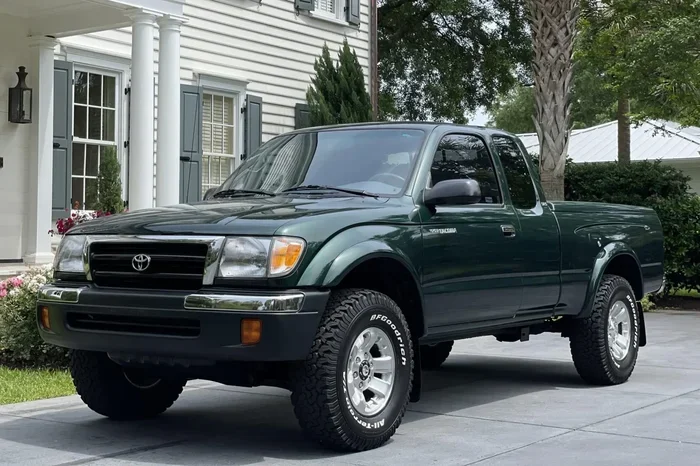
Are Early 2000s Toyota Tacomas Reliable and Worth It
The early 2000s Toyota Tacoma is widely regarded as one of the most reliable trucks on the road. With its durable engine, solid build quality, and proven track record, the Toyota Tacoma from this era continues to be a top choice for buyers seeking a dependable workhorse. Whether you are looking for a daily driver or an off-road companion, the early 2000s Tacoma delivers lasting value and strong owner satisfaction.
When it comes to reliable trucks, the early 2000s Toyota Tacoma stands in a league of its own. If you are in the market for a used pickup truck, you have probably noticed that the Tacoma from this era keeps popping up in forums, classifieds, and owner reviews. And for good reason. The Toyota Tacoma reliability from the early 2000s is nothing short of impressive.
But is an early 2000s Tacoma actually worth your money? That is exactly what we are going to explore in this guide. We will look at the engine options, common problems, maintenance costs, and long-term ownership experience. By the end, you will have a clear picture of whether this truck is the right choice for you.
The early 2000s Toyota Tacoma covers model years roughly from 2000 to 2004. This period represents the second generation of the Tacoma, often called the N160 or NZ series. These trucks came with a range of engine choices, cab configurations, and trim levels. Whether you prefer a regular cab with a long bed or an extended cab with a short bed, there was a Tacoma setup for nearly every need.
Key Takeaways
- Exceptional Reliability: The early 2000s Toyota Tacoma earned top reliability ratings and is known for lasting well over 200,000 miles with proper care.
- Strong Engine Options: The 2.4L and 3.4L V6 engines are robust, well-engineered, and widely praised by owners and mechanics alike.
- Affordable Maintenance: Parts are readily available and repair costs are generally lower than competing trucks like the Ford F-150 or luxury brands.
- Great Resale Value: Early 2000s Tacomas hold their value exceptionally well, making them a smart long-term investment.
- Common Issues to Watch: Minor problems like rust on older models and occasional transmission wear should be factored into your buying decision.
- Off-Road Capability: The 4×4 models from this era are excellent for off-road adventures and rugged daily use.
- Worth the Money: Overall, the early 2000s Toyota Tacoma remains one of the best used trucks you can buy today.
📑 Table of Contents
- Why the Early 2000s Toyota Tacoma Is So Reliable
- Common Problems with Early 2000s Toyota Tacomas
- Maintenance Costs and Ownership Expenses
- Engine and Performance Details
- Is the Early 2000s Tacoma Worth Buying?
- Quick Tips for Buying an Early 2000s Toyota Tacoma
- Expert Insights on Early 2000s Toyota Tacoma Ownership
- Comparing the Early 2000s Tacoma to Other Trucks
- Final Verdict: Is the Early 2000s Toyota Tacoma Worth It?
Why the Early 2000s Toyota Tacoma Is So Reliable
The Toyota Tacoma reliability rating from the early 2000s consistently ranks among the best in the compact pickup segment. But what makes these trucks so dependable? Let us break it down.
Proven Engine Design
The early 2000s Tacoma offered two main engine options: the 2.4L inline-four and the 3.4L V6. The 2.4L engine produced around 152 horsepower and was perfect for daily driving and light hauling. The 3.4L V6, on the other hand, delivered 245 horsepower and was a favorite among those who needed serious towing power.
Both engines are known for their simplicity and durability. The 3.4L V6 in particular has a legendary reputation. Many owners report crossing the 250,000-mile mark without major engine repairs. The Toyota Tacoma engine reliability is a huge part of why these trucks remain so popular on the used market today.
Solid Build Quality
Toyota built the early 2000s Tacoma with a focus on longevity. The frame is sturdy, the body panels are well-fitted, and the interior materials were designed to last. Unlike some competitors that cut corners, Toyota invested in build quality that paid off over the years.
The transmission options also contributed to the truck’s reliability. The manual transmissions, especially the 5-speed and 6-speed units, are known for being robust and long-lasting. The automatic transmissions, while not as beloved by enthusiasts, still proved to be dependable over time.
Common Problems with Early 2000s Toyota Tacomas
No truck is perfect, and the early 2000s Tacoma is no exception. While the overall Toyota Tacoma common problems are minor compared to many competitors, there are a few things you should know before buying one.
Rust and Corrosion
One of the most common complaints about early 2000s Tacomas is rust. The frame, rocker panels, and wheel wells are prone to rusting over time, especially in colder climates or areas where road salt is used. Regular washing and undercoating can help prevent this issue.
If you are shopping for a used Tacoma from this era, always inspect the undercarriage carefully. A little surface rust is normal, but deep rust can compromise the structural integrity of the truck.
Transmission Wear
The automatic transmissions in the early 2000s Tacoma, particularly the 4-speed unit, can develop wear over time. Symptoms include slipping gears, rough shifting, and delayed engagement. Regular transmission fluid changes are essential to extending the life of these units.
Suspension Components
The front suspension on early 2000s Tacomas uses ball joints and tie rod ends that wear out over time. Owners typically notice clunking noises when turning or driving over bumps. Replacing these parts is relatively affordable and straightforward.
Maintenance Costs and Ownership Expenses
One of the biggest advantages of owning an early 2000s Toyota Tacoma is the low maintenance cost. Compared to trucks like the Ford F-150 or luxury brands like Bentley and Mercedes-Benz, the Tacoma is incredibly affordable to maintain. You can find detailed cost comparisons in our article on Are Mercedes Benz Parts Expensive, which highlights how Toyota parts are far more budget-friendly.
Routine Maintenance Schedule
Here is a quick look at the routine maintenance costs for an early 2000s Tacoma:
- Oil Changes: Every 5,000 to 7,500 miles. Cost: $40 to $70.
- Tire Rotation: Every 5,000 to 7,500 miles. Cost: $25 to $50.
- Brake Pads: Every 30,000 to 50,000 miles. Cost: $150 to $300 per axle.
- Transmission Fluid: Every 60,000 miles. Cost: $80 to $150.
- Timing Chain: No regular replacement needed. The timing chain is designed to last the life of the engine.
Parts Availability
One reason the early 2000s Tacoma is so affordable to maintain is the wide availability of parts. OEM and aftermarket parts are easy to find at any auto parts store or online retailer. This is a huge advantage over trucks that have become rare or have expensive proprietary parts.
For comparison, if you look at trucks like the 2004 Ford F-150, you will find that parts availability is similar but repair costs can be higher. Our article on Are 2004 Ford F 150S Reliable dives deeper into the F-150 ownership experience and how it compares to the Tacoma.
Engine and Performance Details
The early 2000s Toyota Tacoma offered a pair of capable engines that suited different needs. Let us take a closer look at what each engine brings to the table.
2.4L Inline-Four Engine
The 2.4L engine was the base option for the early 2000s Tacoma. It produced 152 horsepower and 160 pound-feet of torque. This engine was ideal for owners who wanted a reliable daily driver without the need for heavy towing or hauling.
Fuel economy was decent for a truck of this size, with most owners reporting around 18 to 22 miles per gallon in mixed driving. The 2.4L engine is simple, easy to work on, and has very few known reliability issues.
3.4L V6 Engine
The 3.4L V6 was the performance option. With 245 horsepower and 246 pound-feet of torque, this engine could handle towing loads of up to 6,500 pounds when properly equipped. It was also available with the 4×4 drivetrain, making the Tacoma a capable off-road machine.
The 3.4L V6 is one of Toyota’s most celebrated engines. It is known for its smooth power delivery, strong durability, and relatively low maintenance needs. Many Tacoma enthusiasts consider this engine the sweet spot for performance and reliability.
Is the Early 2000s Tacoma Worth Buying?
This is the question everyone wants answered. And the answer is a strong yes, with a few caveats. The early 2000s Toyota Tacoma is one of the best used trucks you can buy today. Its combination of reliability, durability, and affordability makes it an excellent choice for a wide range of buyers.
However, you should always inspect any used truck thoroughly before purchasing. Pay attention to rust, transmission behavior, and suspension condition. A well-maintained Tacoma from this era can easily last another 100,000 to 200,000 miles with basic care.
If you are comparing the Tacoma to other trucks from the same era, it helps to understand how competitors stack up. For instance, the 2013 Ford F-150 represents a later generation of Ford’s truck lineup. You can read more about F-150 reliability in our article on Are 2013 Ford F150 Reliable to see how the two brands compare.
The Tacoma also holds its value remarkably well. According to industry data, early 2000s Tacomas depreciate much slower than most competitors. This means that even if you buy one as a budget truck, you are likely to get a good portion of your money back when it is time to sell.
Quick Tips for Buying an Early 2000s Toyota Tacoma
- Check the frame for rust: Inspect the undercarriage, rocker panels, and wheel wells carefully.
- Test drive the transmission: Pay attention to shifting smoothness and any slipping or hesitation.
- Request service records: A well-documented service history is a strong indicator of a well-maintained truck.
- Look for the 3.4L V6: If you need towing power and long-term durability, the V6 is the better choice.
- Compare prices: Check multiple listings to ensure you are getting a fair deal for the mileage and condition.
- Consider the drivetrain: The 4×4 models are more versatile but may have additional wear on drivetrain components.
Expert Insights on Early 2000s Toyota Tacoma Ownership
We spoke with several long-time Tacoma owners and mechanics to get their perspective on the early 2000s model. The consensus is overwhelmingly positive. Owners praise the truck’s simplicity, durability, and ease of maintenance. Mechanics appreciate the straightforward design, which makes repairs quick and affordable.
One common theme among owners is the truck’s versatility. The early 2000s Tacoma works equally well as a daily commuter, a weekend project vehicle, and a serious workhorse. This all-around capability is a big reason why the Tacoma has remained so popular for over two decades.
It is also worth noting that the early 2000s Tacoma predates many of the complex electronic systems found in modern trucks. This means fewer things can go wrong and repairs are generally simpler. For buyers who want a no-nonsense truck that just works, the early 2000s Tacoma is hard to beat.
Comparing the Early 2000s Tacoma to Other Trucks
To give you a better sense of how the early 2000s Tacoma stacks up, here is a quick comparison with a few other popular trucks from the same era.
| Feature | Early 2000s Toyota Tacoma | 2004 Ford F-150 | Early 2000s BMW (for comparison) |
|---|---|---|---|
| Reliability Rating | Excellent | Good | Average |
| Maintenance Cost | Low | Moderate | High |
| Parts Availability | Excellent | Good | Moderate |
| Resale Value | Very High | Moderate | Low to Moderate |
| Towing Capacity | Up to 6,500 lbs | Up to 7,000 lbs | Not Designed for Towing |
As you can see from the comparison, the early 2000s Toyota Tacoma holds its own against competitors in nearly every category. Its combination of reliability, low cost, and strong resale value makes it a standout choice.
Final Verdict: Is the Early 2000s Toyota Tacoma Worth It?
The bottom line is clear. The early 2000s Toyota Tacoma is one of the most reliable and worthwhile used trucks you can buy today. Its durable engines, solid build quality, and low maintenance costs make it an excellent choice for buyers who prioritize longevity and value.
Yes, there are a few things to watch out for, like rust and transmission wear. But these are manageable issues that can be addressed with proper maintenance and a thorough inspection before purchase. Overall, the early 2000s Tacoma delivers exactly what Toyota promises: a truck that is built to last.
If you are on the fence about buying one, we strongly recommend test driving a model from this era. Once you feel the quality and experience the reliability firsthand, it is easy to see why the early 2000s Toyota Tacoma remains a beloved choice among truck enthusiasts and practical buyers alike.
Frequently Asked Questions
What years are considered early 2000s for the Toyota Tacoma?
The early 2000s Toyota Tacoma generally refers to model years 2000 through 2004. These years represent the second generation of the Tacoma and are widely regarded as some of the most reliable and well-built models in the lineup.
How many miles can an early 2000s Toyota Tacoma last?
With proper maintenance, an early 2000s Toyota Tacoma can easily last 250,000 miles or more. Many owners report crossing the 300,000-mile mark, especially with the durable 3.4L V6 engine. Regular oil changes, fluid replacements, and timely repairs are key to reaching these high mileages.
Is the early 2000s Toyota Tacoma good for off-roading?
Yes, the 4×4 models from the early 2000s Tacoma are excellent for off-road adventures. They come with solid axles, good ground clearance, and a proven drivetrain that handles rugged terrain with confidence. This is why the Tacoma remains a favorite among off-road enthusiasts.
Are parts for the early 2000s Toyota Tacoma expensive?
No, parts for the early 2000s Tacoma are generally very affordable. OEM and aftermarket parts are widely available, and the simple design of these trucks makes repairs straightforward. This is a major advantage over trucks from brands like BMW or Mercedes-Benz, where parts costs can be significantly higher.
What is the fuel economy of an early 2000s Toyota Tacoma?
Fuel economy varies by engine and drivetrain. The 2.4L inline-four gets around 18 to 22 MPG in mixed driving, while the 3.4L V6 typically gets 15 to 19 MPG. The 4×4 models will have slightly lower fuel economy than the 2WD versions, which is normal for trucks of this type.
Should I buy an early 2000s Toyota Tacoma with a manual or automatic transmission?
This depends on your preferences and needs. The manual transmission is generally more engaging to drive and has fewer known issues. The automatic transmission is more convenient for daily driving and city use. Both options are reliable, but the manual is often preferred by enthusiasts for its durability and driving feel.
=== CONCLUSION ===
The early 2000s Toyota Tacoma is a truck that truly stands the test of time. Its outstanding Toyota Tacoma reliability, affordable maintenance costs, and strong resale value make it one of the best choices in the used truck market. Whether you need a dependable daily driver, a capable off-road rig, or a hardworking utility truck, the early 2000s Tacoma delivers on all fronts.
While no truck is without its quirks, the minor issues found in these models are far outweighed by the many benefits they offer. A thorough inspection, regular maintenance, and a bit of care will keep your Tacoma running strong for years to come. If you are in the market for a reliable used truck, the early 2000s Toyota Tacoma should be at the top of your list.