What Happens If You Put R22 in a R134a System Accidentally
Accidentally putting R22 refrigerant into an R134a system is a costly mistake that can damage your AC compressor, cause refrigerant leaks, and ruin your cooling system. R22 and R134a operate at different pressures and use different oils, making them incompatible. If you discover the mix-up early, quick action can save you from expensive auto air conditioning repairs and full system replacement.
You were in a hurry. Maybe the parts store was closing, or you just grabbed the wrong can off the shelf. Now your R22 refrigerant is sitting inside an R134a system, and your stomach is sinking. This is a situation that catches a lot of DIYers and even some technicians off guard. The truth is, putting R22 into an R134a system by accident can lead to some serious problems. But how bad is it really? And what should you do right now?
Auto air conditioning systems are finicky. They rely on the right refrigerant, the right pressure, and the right lubricant to work properly. When you introduce the wrong refrigerant, you disrupt the entire balance. Whether you are dealing with a car AC, a truck, or even a home unit, the consequences of mixing R22 and R134a are real and potentially expensive. This article walks you through exactly what happens, what symptoms to watch for, and how to fix the problem before it gets worse.
The good news is that catching the mistake early gives you a real chance to minimize damage. The bad news is that ignoring it will almost always make things worse. Let us break down everything you need to know about this common but dangerous refrigerant mix-up.
Key Takeaways
- Incompatible Refrigerants: R22 and R134a have different chemical compositions, pressures, and lubricants that do not work together.
- Compressor Damage: Mixing R22 into an R134a system can cause the AC compressor to seize or fail prematurely.
- Pressure Problems: R22 runs at higher pressures than R134a, which can blow out seals, hoses, and the condenser.
- Oil Incompatibility: R22 uses mineral oil while R134a uses PAG or POE oil, leading to poor lubrication and system blockages.
- Costly Repairs: Fixing a contaminated system can cost hundreds to thousands of dollars depending on the damage.
- Act Fast: If you catch the mistake early, a full refrigerant recovery and system flush may prevent permanent damage.
📑 Table of Contents
- Understanding R22 and R134a Refrigerants
- What Happens When You Put R22 in an R134a System
- Symptoms That R22 Has Been Accidentally Added
- What To Do If You Accidentally Mix R22 and R134a
- Cost of Repairing a Contaminated AC System
- Preventing Accidental Refrigerant Mixing
- Can You Ever Put R22 Into an R134a System on Purpose?
- Environmental and Legal Considerations
- Final Thoughts
Understanding R22 and R134a Refrigerants
Before we talk about what goes wrong, it helps to understand what makes these two refrigerants so different. R22 and R134a are not interchangeable. They are two completely different chemicals with different properties, different operating pressures, and different lubricant requirements.
What Is R22 Refrigerant?
R22, also known as HCFC-22 or Freon, has been the go-to refrigerant for decades. It was the standard in residential HVAC systems and older car air conditioning units. R22 operates at a lower pressure compared to R134a in most applications, but it uses mineral oil as its lubricant. Over the years, R22 has been phased out in many countries because of its ozone-depleting properties. This means it is becoming harder to find and more expensive.
Because of the phaseout, some people try to substitute R22 with other refrigerants. This is where the accidental mixing problem often starts. People grab what is available without checking compatibility.
What Is R134a Refrigerant?
R134a is the modern standard for most automotive AC systems. It replaced R12 in cars starting in the mid-1990s. R134a operates at higher pressures than R12 and uses PAG (polyalkylene glycol) or POE (polyolester) oil for lubrication. It is considered more environmentally friendly than R22, though it is still a greenhouse gas.
R134a systems have specific components designed for their pressure levels. The compressor, condenser, expansion valve, and evaporator are all built to handle the unique demands of R134a refrigerant. When you introduce R22 into this system, every single component is affected.
What Happens When You Put R22 in an R134a System
So, what actually goes wrong? The short answer is a lot of things. The longer answer involves pressure imbalances, lubrication failure, and chemical incompatibility. Here is a detailed look at the damage that can occur.
Pressure Imbalance and System Stress
R22 and R134a operate at very different pressure levels. When you fill an R134a system with R22, the pressure readings become unpredictable. The compressor has to work harder than it was designed to. This extra strain can cause the compressor to overheat, leading to premature failure.
In a car AC system, the condenser is responsible for releasing heat. When the pressure spikes, the condenser has to work overtime. Over time, this can lead to refrigerant leaks at connection points, seals, and even the condenser itself. A small leak can turn into a big problem fast.
Compressor Damage and Failure
The AC compressor is the heart of your cooling system. It relies on the right refrigerant and the right oil to keep its internal parts moving smoothly. When R22 enters an R134a system, the mineral oil from the R22 does not mix well with the PAG or POE oil already in the system. This creates a sludge-like substance that clogs passages and prevents proper lubrication.
Without proper lubrication, the compressor’s internal components grind against each other. The result can be a seized compressor. A seized AC compressor means the entire system stops working. Replacing an AC compressor is one of the most expensive auto air conditioning repairs you can face.
Oil Contamination and Lubrication Breakdown
We mentioned oil incompatibility, but this deserves its own attention. The lubricant in your AC system does more than just reduce friction. It also helps seal internal components and carries heat away from the compressor.
When R22 mineral oil mixes with R134a PAG or POE oil, the two do not blend properly. Instead, they form a gummy residue that coats the inside of your system. This residue can block the thermal expansion valve, clog the orifice tube, and coat the evaporator fins. The result is poor cooling performance and eventually a complete system failure.
Cooling Efficiency Drops Dramatically
Even if the system does not suffer catastrophic failure right away, you will notice a significant drop in cooling performance. Your car AC might blow lukewarm air instead of cold air. This happens because the refrigerant charge is incorrect, the pressures are off, and the system cannot cycle properly.
Some people ignore this symptom, thinking the system just needs more refrigerant. But topping off a contaminated system only makes the problem worse. You are adding more of the wrong refrigerant to an already compromised system.
Refrigerant Leaks and Moisture Problems
R22 in an R134a system can also cause moisture contamination. R22 systems were often charged using different service equipment that may not have been properly evacuated. Moisture inside the AC system reacts with refrigerant and oil to form acids. These acids corrode metal components, eat through rubber seals, and create tiny refrigerant leaks that are hard to find and fix.
Moisture in the system can also form ice crystals inside the expansion valve or orifice tube. This is called “slugging,” and it can cause physical damage to the compressor and block the flow of refrigerant entirely.
Symptoms That R22 Has Been Accidentally Added
How do you know if R22 has been put into your R134a system? Watch for these warning signs. Catching the problem early gives you the best chance of a simple fix.
Unusual AC Pressure Readings
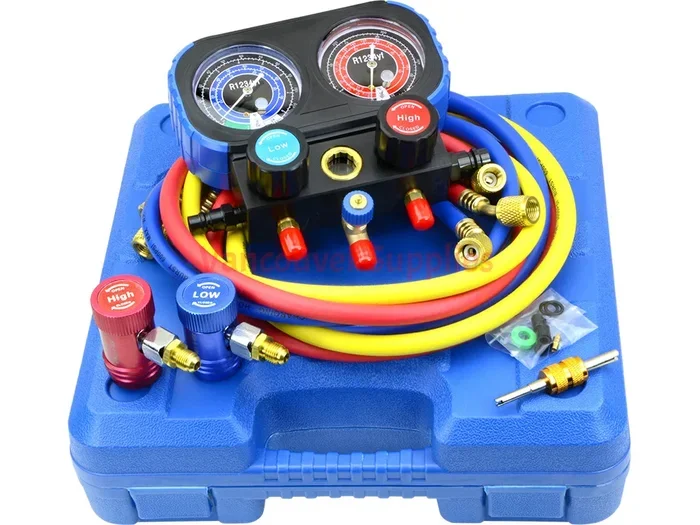
When you hook up a pressure gauge set to your AC service ports, the readings will tell you a lot. If your high side pressure is abnormally high or your low side pressure is unusually low, the refrigerant charge is likely wrong. R22 and R134a produce different pressure-temperature relationships, so the numbers will not match what you expect for an R134a system.
Warm Air From the Vents
This is the most obvious symptom. If your AC was working fine and suddenly starts blowing warm or mildly cool air after a recent service, suspect refrigerant contamination. The system cannot cool properly when the refrigerant type is wrong.
Unusual Noises From the Compressor
Listen to your AC compressor when the system is running. If you hear grinding, clicking, or knocking sounds, the compressor may be struggling. Lack of proper lubrication from oil incompatibility often causes these noises. Ignoring them can lead to a complete compressor failure.
Visible Oil Leaks
Check around the AC lines, compressor, and connections for oily residue. When the wrong oils mix and break down, they can leak out at seals and joints. You might notice a greasy film around the AC service ports or along the rubber hoses.
Foul Smell From the Vents
In some cases, contaminated refrigerant and degraded oil can produce a chemical or burning smell when the AC runs. This is a sign that the system is breaking down internally. Turn the AC off immediately if you notice this smell.
What To Do If You Accidentally Mix R22 and R134a
If you have already made the mistake, do not panic. There are steps you can take to limit the damage. The faster you act, the better your chances of avoiding a costly repair.
Step 1: Stop Using the System Immediately
Do not keep running the AC with the wrong refrigerant in the system. Every minute you run it, the damage gets worse. Turn the AC off completely and leave the system alone until you can get it properly serviced.
Step 2: Recover the Contaminated Refrigerant
You need a licensed refrigerant recovery machine to remove the contaminated charge. This is not a DIY job in most cases, because recovering and handling refrigerants requires proper equipment and certification in many regions. A certified AC technician can recover the R22 and R134a mixture safely.
Step 3: Flush the Entire System
Once the refrigerant is recovered, the system needs a thorough flush. This removes the contaminated oil, sludge, and any debris that has built up inside the lines, condenser, evaporator, and compressor. A professional AC shop will use a dedicated flushing solution designed for automotive AC systems.
In some cases, the flush may not be enough. If the compressor has already been running with contaminated oil for an extended period, internal damage may have already occurred. The technician may need to inspect or replace the compressor.
Step 4: Replace the Receiver Drier or Accumulator
The receiver drier (or accumulator) is designed to remove moisture from the system. Once it has been exposed to contaminated refrigerant and mixed oils, it is no longer effective. Replacing it is a relatively inexpensive part of the repair and helps ensure the system stays dry and clean after the flush.
Step 5: Evacuate and Recharge with the Correct Refrigerant
After the flush and component replacement, the system must be evacuated to remove any remaining air and moisture. Then it can be recharged with the correct R134a refrigerant and the appropriate amount of PAG or POE oil. The technician will check the pressure readings to confirm the system is charging correctly.
Step 6: Test the System Thoroughly
Once the repair is complete, run the AC system and monitor the pressure gauges. Check for proper cooling performance at all fan speeds. Inspect all connections for leaks using a UV dye or electronic leak detector. A proper test drive with the AC running at full blast will confirm everything is working as it should.
Cost of Repairing a Contaminated AC System
The cost to fix an R22-contaminated R134a system varies widely depending on the extent of the damage. Here is a general breakdown of what you might expect.
| Repair | Estimated Cost Range |
|---|---|
| Refrigerant recovery and flush | $150 – $300 |
| Receiver drier replacement | $50 – $150 |
| AC compressor replacement | $500 – $1,200 |
| Full system flush and component replacement | $800 – $2,000 |
| Condenser replacement (if leaked) | $300 – $700 |
| Complete AC system rebuild | $1,500 – $3,000+ |
As you can see, the cost can escalate quickly if the contamination is not caught early. A simple flush and recharge might cost you a few hundred dollars. But if the compressor has seized or the condenser has developed leaks, you are looking at a much bigger bill. This is why acting fast matters so much.
Preventing Accidental Refrigerant Mixing
The best way to deal with this problem is to avoid it altogether. Here are some practical tips to keep your AC system safe.
Label Your Refrigerant Containers
If you store refrigerant cans at home or in your shop, label them clearly. Use tape or a marker to identify the refrigerant type. R22 and R134a cans can look similar, especially if the labels have worn off. A few seconds of labeling can save you hours of repair work.
Check the Service Manual
Before adding any refrigerant, consult your vehicle’s service manual. It will tell you exactly which refrigerant type your system uses. Do not guess. Do not assume. The manual will also list the correct oil type and the proper charging procedure.
Use the Right Service Equipment
R22 and R134a require different service gauges and hoses. Using the wrong equipment can lead to cross-contamination even if you are careful. Keep separate gauge sets for each refrigerant type, and never share hoses between systems without properly cleaning them first.
Work With a Qualified Technician
If you are not confident in your AC knowledge, take your vehicle to a qualified auto AC specialist. A professional will have the right tools, the right knowledge, and the right experience to avoid costly mistakes. The cost of a professional diagnosis is much less than the cost of repairing a damaged system.
Can You Ever Put R22 Into an R134a System on Purpose?
Some people wonder if R22 can be used as a substitute for R134a in a pinch. The answer is no. These refrigerants are not compatible by design. Even if the system seems to work temporarily, the pressure differences and oil incompatibility will cause damage over time.
The only scenario where R22 might be used in a system originally designed for R134a is during a full retrofit, and even then, it requires a complete system overhaul. The compressor, condenser, expansion valve, and all seals must be replaced with R22-compatible components. The system must be thoroughly flushed and properly evacuated before charging with R22. This is a major project and should only be done by an experienced HVAC or auto AC professional.
In most cases, it is far more practical and cost-effective to simply use the correct R134a refrigerant and keep the system as designed. Retrofitting to R22 makes sense only in specific situations where R22 is the only available option and the system is being fully restored to its original specifications.
Environmental and Legal Considerations
It is also worth noting that both R22 and R134a are regulated substances. R22 has been phased out under the Montreal Protocol due to its ozone-depleting potential. In many countries, it is illegal to release R22 into the atmosphere or to vent it during service. Proper refrigerant recovery and recycling are required by law.
R134a is also a greenhouse gas, and its release is regulated in many jurisdictions. If you are working on your AC system, always use proper recovery equipment and follow local regulations. Improper handling of refrigerants can result in fines and environmental harm.
Final Thoughts
Putting R22 into an R134a system by accident is a stressful situation, but it is not the end of the world. The key is to act quickly and get the system properly serviced before permanent damage sets in. The longer you let contaminated refrigerant sit in the system, the more damage it does. A full refrigerant recovery, system flush, and component inspection can often save the day if you catch the problem early.
Remember that R22 and R134a are fundamentally different refrigerants. They operate at different pressures, use different oils, and require different system components. Treating them as interchangeable is a recipe for expensive repairs and frustrating downtime. Take the time to verify the correct refrigerant before every service, and always label your supplies clearly.
If you are ever in doubt, consult a professional. A few minutes of expert advice can save you hundreds or even thousands of dollars in repair costs. Your AC system works hard to keep you comfortable, especially during hot summer months. Give it the care and the right refrigerant it deserves, and it will keep running strong for years to come.
Frequently Asked Questions
Can a small amount of R22 in an R134a system cause damage?
Yes, even a small amount of R22 can cause problems. The oil incompatibility alone can create sludge that clogs passages and reduces lubrication. While a tiny amount might not cause immediate failure, it will degrade system performance and can lead to bigger issues over time.
How do I know if my AC system has been contaminated with R22?
The most common signs are poor cooling performance, unusual pressure readings on your gauge set, strange noises from the compressor, and visible oil leaks around AC connections. If you recently had refrigerant added and notice any of these symptoms, have the system inspected right away.
Is it legal to mix R22 and R134a?
It is not illegal to have mixed refrigerants in your possession, but releasing them into the atmosphere is illegal in most jurisdictions. Proper recovery and disposal must be handled by a certified technician using approved refrigerant recovery equipment.
Can I just evacuate the system and reuse it with R134a after an R22 contamination?
Evacuation alone is not enough. The contaminated oil must be flushed out completely, and the receiver drier or accumulator must be replaced. In some cases, the compressor may also need to be replaced if it has been running with mixed oils for an extended period.
How long can I drive with R22 in my R134a system before serious damage occurs?
There is no safe timeframe. Damage can begin immediately depending on the amount of R22 introduced and how long the system has been running. Even short-term use can cause oil contamination and pressure problems. The best approach is to have the system serviced as soon as you discover the mix-up.
What is the difference between R22 and R134a refrigerant pressure?
R22 generally operates at lower pressures than R134a in most automotive applications. R134a systems are designed for higher pressure levels, and introducing R22 disrupts the pressure balance. This mismatch puts extra stress on seals, hoses, and the compressor, leading to potential leaks and mechanical failure.
=== CONCLUSION ===
Mixing R22 into an R134a system is a mistake that no car owner wants to make, but it happens more often than you might think. The differences in pressure, oil type, and chemical composition make these two refrigerants completely incompatible. From compressor damage to refrigerant leaks and cooling failure, the risks are real and the repair costs can be significant.
The best defense is prevention. Label your containers, check your service manual, use the right equipment, and never assume. If the mistake does happen, act fast. A quick response with professional refrigerant recovery and a full system flush can often prevent the worst outcomes. Do not wait for symptoms to get worse, because by the time you notice them, the damage may already be done.
Take care of your auto air conditioning system, and it will take care of you. Use the right refrigerant, follow the proper procedures, and when in doubt, trust a qualified technician. Your cooling system — and your wallet — will thank you for it.