The Fastest Car in the World in 2023 and Record Breakers
The fastest car in the world in 2023 continues to spark debate among car enthusiasts and engineers alike. From the Bugatti Chiron Super Sport to the Rimac Nevera, multiple supercars are chasing the top speed crown. This guide breaks down every speed record, the engineering behind each machine, and what the future holds for the fastest production car.
When you think about the fastest car in the world in 2023, what comes to mind? Maybe it is a sleek supercar with a massive wing, or a lightning-quick electric machine that goes from zero to sixty in under two seconds. The truth is, the answer is not as simple as picking one name. Multiple speed record holders compete for the crown, and each one brings something unique to the table.
The world of top speed records is wild. Engineers push the limits of physics. Tire companies develop rubber that can handle insane forces. And manufacturers spend millions to shave off every tenth of a second. In this article, we will explore the fastest cars on the planet, how they achieve such incredible acceleration, and what makes each one special.
Whether you are a car enthusiast or just curious about which machine holds the title, this guide covers everything. We will look at the numbers, the stories behind the records, and what the future holds for speed demons everywhere.
Key Takeaways
- The Bugatti Chiron Super Sport 300+ was the first production car to break the 300 mph barrier.
- The Rimac Nevera proves that electric hypercars can compete with the fastest combustion engines on the planet.
- Speed records depend on more than just horsepower — aerodynamics, tires, and engine tuning all matter.
- Multiple cars claim the title depending on how you define “fastest,” including the SSC Tuatara and Hennessey Venom F5.
- The race for speed is shifting toward electric powertrains, which deliver instant torque and insane acceleration.
- Future record breakers will likely combine hybrid technology with advanced aerodynamics to push past 350 mph.
📑 Table of Contents
- What Is the Fastest Car in the World in 2023?
- Top Contenders for the Fastest Car Title
- How Fast Is Too Fast? Understanding Speed Records
- What Makes a Car So Fast? The Engineering Behind Speed
- Electric vs. Combustion: The New Speed Race
- Common Mistakes People Make When Comparing Fast Cars
- Key Takeaways
- Conclusion
What Is the Fastest Car in the World in 2023?
Determining the fastest car in the world in 2023 depends on how you measure speed. Are you talking about the highest top speed ever recorded? Or are you focused on 0 to 60 mph times? Maybe you care about how fast a car can lap a track. Each metric tells a different story.
Right now, the Bugatti Chiron Super Sport 300+ often gets the nod for top speed. It was the first production car to officially break the 300 mph barrier. That is a mind-blowing milestone. But other hypercars like the SSC Tuatara and the Hennessey Venom F5 also make strong claims.
On the electric side, the Rimac Nevera and Lotus Evija show that battery-powered machines can match or even beat the fastest combustion engines. The fastest car in the world in 2023 is not just one vehicle — it is a whole lineup of incredible machines, each pushing the boundaries of what is possible.
Why the Debate Matters
The debate over the fastest production car is more than just bragging rights. It drives innovation. When manufacturers compete for the speed record, they develop new technologies. These technologies eventually trickle down to cars that everyday drivers can buy. So the fastest car in the world in 2023 is not just a trophy — it is a stepping stone for the entire automotive industry.
Top Contenders for the Fastest Car Title
Several supercars and hypercars are in the running for the fastest car in the world in 2023. Each one has a unique story, a powerful engine, and a top speed that will leave you breathless. Let us take a closer look at the main contenders.
Bugatti Chiron Super Sport 300+
The Bugatti Chiron Super Sport 300+ made history in 2019 when it hit 304.77 mph. That was the first time a production car broke the 300 mph mark. The car uses a quad-turbo W16 engine that produces over 1,578 horsepower. That is a lot of power pushing this machine forward.
What makes the Chiron Super Sport 300+ special is its aerodynamics. The car has a longer tail, a redesigned rear wing, and special tire technology from Michelin. All of these work together to keep the car stable at extreme top speeds. It is a masterpiece of engineering and design.
SSC Tuatara
The SSC Tuatara is another serious contender for the fastest car in the world in 2023. This American hypercar claims a top speed of over 295 mph. It uses a twin-turbo V8 engine that produces 1,750 horsepower on E85 fuel. That is serious power from a relatively compact engine.
SSC, which stands for Shelby SuperCars, built the Tuatara from the ground up. The company focused on lightweight construction and wind-tunnel testing to minimize drag. The result is a car that slices through the air with minimal resistance. The SSC Tuatara proves that American speed demons can go head-to-head with European luxury supercars.
Hennessey Venom F5
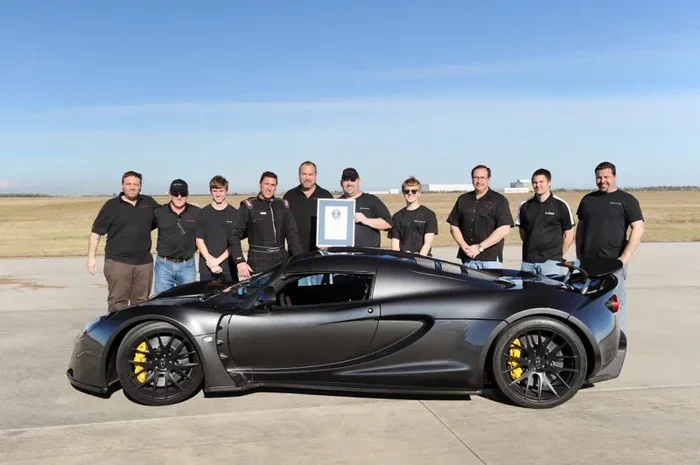
Hennessey is a name that car enthusiasts trust when it comes to speed. The Venom F5 aims for a top speed of 311 mph. It uses a twin-turbo V8 engine that produces 1,817 horsepower. That is enough power to launch this car into the record books.
Hennessey built the Venom F5 with one goal in mind: absolute speed. The car features a lightweight carbon fiber body, a custom 7-speed dual-clutch transmission, and active aerodynamics that adjust at high speeds. Every detail is optimized for maximum velocity. The Venom F5 is a true speed demon that lives up to its name.
Rimac Nevera
The Rimac Nevera changes the game entirely. This Croatian electric hypercar goes from 0 to 60 mph in just 1.74 seconds. That makes it one of the fastest accelerating cars ever built. The Nevera uses four electric motors that produce a combined 1,914 horsepower.
What makes the Rimac Nevera so fast is the instant delivery of electric torque. Unlike a combustion engine, which needs to rev up, an electric motor delivers maximum power immediately. This gives the Nevera a massive advantage in acceleration. The car also has advanced aerodynamics and a low center of gravity for stability. The fastest car in the world in 2023 might just be electric.
How Fast Is Too Fast? Understanding Speed Records
Speed records are not just about going fast. They are about going fast under controlled conditions. The land speed record has a long and exciting history. From the early days of streamlined racers to modern jet-powered cars, the pursuit of speed has always pushed the limits of human engineering.
The 300 mph Milestone
Breaking 300 mph was a huge moment in automotive history. The Bugatti Chiron Super Sport 300+ achieved this in 2019 on a public road in Germany. The driver, Andy Wallace, piloted the car at incredible speed on a closed section of the Autobahn. It was a moment that will be remembered forever in the world of speed records.
Since then, other manufacturers have tried to surpass this milestone. The SSC Tuatara and the Hennessey Venom F5 both aim higher. The fastest car in the world in 2023 is defined by who can consistently achieve and verify the highest top speed under official conditions.
What Counts as an Official Record?
Not every speed claim is official. To set a valid land speed record, a car must meet strict criteria. The run must be completed on a closed course. It must be verified by an independent organization, such as Guinness World Records or FIA. The car must also be a production vehicle, meaning it is available for customers to purchase.
Some claims have been disputed in the past. That is why verification matters so much. When a car like the Bugatti Chiron Super Sport 300+ sets a record, it goes through rigorous testing. The data is checked, the conditions are verified, and only then is the record officially recognized. This process keeps the world of speed records fair and credible.
What Makes a Car So Fast? The Engineering Behind Speed
Making a supercar fast is not just about slapping a big engine in it. It is a complex blend of power, aerodynamics, weight reduction, and traction. Every element plays a role in how fast a car can go. Let us break down the key factors that make the fastest car in the world in 2023 so incredibly quick.
Engine Power and Horsepower
Horsepower is the bread and butter of top speed. The more horsepower a car has, the more force it can apply to the road. The Bugatti Chiron Super Sport 300+ has over 1,578 horsepower. The Hennessey Venom F5 pushes past 1,800 horsepower. And the Rimac Nevera delivers 1,914 horsepower through electric motors.
But raw power is not everything. A car also needs a reliable drivetrain to put all that power to the ground efficiently. Transmission technology, gear ratios, and traction control systems all work together to ensure that the power translates into actual speed.
Aerodynamics and Drag Reduction
At high speeds, air resistance becomes the biggest enemy of a speed demon. The faster a car goes, the more energy it loses pushing through the air. That is why aerodynamics is so important in the design of the fastest car in the world in 2023.
Manufacturers use wind tunnel testing and computational fluid dynamics to shape their cars for minimal drag. Features like active rear wings, underbody diffusers, and front splitters all help manage airflow. The goal is to let the car slip through the air with as little resistance as possible.
Tire Technology
You cannot go fast without the right tires. At speeds above 200 mph, tire technology becomes critical. The tires must handle extreme heat, massive forces, and incredible grip. Companies like Michelin and Pirelli develop special high-speed tires for these machines.
The Bugatti Chiron Super Sport 300+ uses custom Michelin Pilot Sport Cup 2 tires rated for speeds over 300 mph. These tires are built with reinforced sidewalls and special compounds that can handle the heat and stress of extreme velocity. Without the right tires, even the most powerful supercar would be limited.
Weight Reduction and Chassis Design
Lighter cars go faster. It is that simple. Every extra pound a car carries requires more horsepower to move it. That is why the fastest car in the world in 2023 uses carbon fiber and other lightweight materials wherever possible.
The chassis design also plays a role. A stiff monocoque or space frame provides a solid foundation for the car’s suspension and handling systems. This ensures that the car remains stable and controllable even at extreme speeds. Weight distribution and center of gravity are carefully engineered to maximize performance.
Electric vs. Combustion: The New Speed Race
The fastest car in the world in 2023 is not just about big twin-turbo V8 engines anymore. Electric hypercars have entered the race, and they are changing the game. Companies like Rimac, Lotus, and Pininfarina are building electric machines that rival or surpass the fastest combustion cars.
Why Electric Cars Are So Fast
Electric motors deliver instant torque from zero RPM. There is no need to wait for the engine to rev up. This means electric hypercars can accelerate incredibly fast, often beating their combustion counterparts in the 0 to 60 mph sprint.
The Rimac Nevera is the perfect example. It goes from 0 to 60 mph in under 1.8 seconds. That is faster than almost any production car with a combustion engine. The electric powertrain also provides smooth, consistent power delivery, which helps with traction and stability at high speeds.
The Future of Speed
As battery technology improves, electric hypercars will only get faster. Higher energy density means more power without adding weight. Better thermal management means motors can sustain peak performance longer. The fastest car in the world in 2023 might be just the beginning of a new era in speed records.
Some experts believe that electric cars will eventually dominate the top speed charts. The combination of instant torque, fewer moving parts, and advanced software control gives electric machines a clear advantage. The speed race is evolving, and electricity is leading the charge.
Common Mistakes People Make When Comparing Fast Cars
When comparing the fastest car in the world in 2023, many people make mistakes that lead to incorrect conclusions. Understanding these pitfalls can help you make more informed judgments about speed records and performance claims.
Mistake 1: Confusing 0 to 60 mph with top speed. These are two very different metrics. A car can accelerate incredibly fast but have a lower top speed than a slower-accelerating rival. Always check which metric a manufacturer is quoting.
Mistake 2: Ignoring verification. Not every speed claim is verified by an independent source. Some manufacturers use optimistic numbers that have not been officially tested. Look for verified records from organizations like FIA or Guinness World Records.
Mistake 3: Overlooking real-world conditions. A car tested on a closed track with perfect conditions will perform differently than one tested on a public road with wind and traffic. Always consider the testing environment when comparing top speeds.
Mistake 4: Focusing only on horsepower. Horsepower matters, but it is not the only factor. Aerodynamics, weight, traction, and transmission all play a role. A car with less horsepower but better aerodynamics can actually be faster than a more powerful rival.
Mistake 5: Forgetting about production limits. Some cars are built as one-off prototypes, not for sale to the public. These prototype vehicles may achieve incredible speeds, but they are not production cars. The fastest car in the world in 2023 should be a vehicle that customers can actually buy.
Key Takeaways
- The Bugatti Chiron Super Sport 300+ was the first production car to break the 300 mph speed record.
- The Rimac Nevera proves that electric hypercars can deliver insane acceleration and compete with the fastest combustion engines.
- Speed records depend on more than just horsepower — aerodynamics, tires, weight, and drivetrain all matter.
- Multiple cars claim the title of the fastest car in the world in 2023, including the SSC Tuatara and Hennessey Venom F5.
- Electric powertrains are reshaping the speed race with instant torque and advanced technology.
- Always verify speed claims through independent organizations like FIA or Guinness World Records.
- The future of speed will likely combine hybrid technology, advanced aerodynamics, and cutting-edge battery tech.
Conclusion
The fastest car in the world in 2023 is a topic that sparks excitement and debate among car enthusiasts everywhere. From the legendary Bugatti Chiron Super Sport 300+ to the futuristic Rimac Nevera, the world of speed records has never been more exciting. Each supercar and hypercar brings its own strengths to the table, and the competition continues to push the boundaries of what is possible.
What is clear is that the fastest car in the world in 2023 is not just about one vehicle. It is about the relentless pursuit of speed, innovation, and engineering excellence. Whether you prefer the roar of a twin-turbo V8 or the silent rush of an electric motor, there has never been a more exciting time to be a car enthusiast.
The speed race is far from over. New hypercars are already in development. Battery technology continues to improve. And the dream of breaking every speed record is still alive. The fastest car in the world in 2023 is just a snapshot of what is possible today. Tomorrow, someone will build something even faster.
So the next time you hear about a new speed record, remember the incredible engineering, dedication, and passion that went into making it happen. The fastest car in the world in 2023 is more than a number on a speedometer. It is a testament to human ingenuity and the unstoppable desire to go faster.
Frequently Asked Questions
What is the fastest car in the world in 2023?
The fastest car in the world in 2023 is widely considered to be the Bugatti Chiron Super Sport 300+, which was the first production car to break the 300 mph barrier. However, other contenders like the Rimac Nevera and SSC Tuatara also make strong claims depending on the metric used.
How fast can the Bugatti Chiron Super Sport 300+ go?
The Bugatti Chiron Super Sport 300+ has an official top speed of 304.77 mph. It achieved this milestone in 2019 and remains one of the most iconic speed records in automotive history.
Can electric cars really be the fastest cars in the world?
Yes! The Rimac Nevera proves that electric hypercars can match or beat the fastest combustion engines. With 1,914 horsepower and instant electric torque, the Nevera delivers incredible acceleration and top speed performance.
What is the difference between a supercar and a hypercar?
A supercar is a high-performance vehicle that sits above a standard sports car. A hypercar takes performance to an entirely new level, often featuring extreme horsepower, advanced aerodynamics, and limited production numbers. The fastest car in the world in 2023 falls into the hypercar category.
How is the fastest car record verified?
Official speed records are verified by independent organizations such as FIA or Guinness World Records. The car must complete runs under controlled conditions, and the data must be independently confirmed before a record is officially recognized.
Will the fastest car record be broken again soon?
Absolutely. With advances in hybrid technology, battery engineering, and aerodynamics, the next generation of speed demons will likely push past 350 mph. The race for the fastest car in the world in 2023 is just the beginning of what is to come.