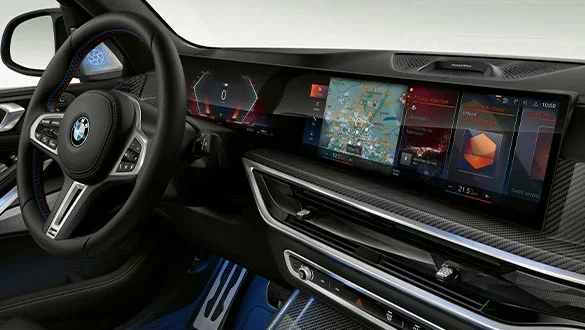
Can an Audi Q7 Qualify for Section 179 Tax Deductions
Yes, an Audi Q7 can qualify for Section 179 tax deductions under certain conditions. The key factor is whether the vehicle meets IRS weight and business-use requirements. Business owners who use the Audi Q7 for work may be able to deduct a significant portion or the full purchase price, reducing their tax bill substantially.
Running a business means making smart financial moves. Every dollar you can save on taxes is a dollar you can reinvest. One question business owners ask often is whether their Audi Q7 can qualify for Section 179 tax deductions. The short answer is yes, but there are important details you need to understand.
Section 179 is a powerful tax tool. It lets businesses deduct the full cost of qualifying equipment and vehicles in the year of purchase. This can save you thousands of dollars. But not every vehicle qualifies, and the rules can be tricky. In this guide, we will walk through everything you need to know about using Section 179 for your Audi Q7. We will cover eligibility, limits, requirements, and practical tips to help you make the most of this tax opportunity.
Key Takeaways
- Eligibility Matters: The Audi Q7 must meet IRS vehicle classification rules to qualify for Section 179.
- Gross Vehicle Weight Rating Is Critical: GVWR over 6,000 lbs opens the door to larger deductions.
- Business Use Requirement: The vehicle must be used more than 50% for business purposes.
- Deduction Limits Apply: The 2024 Section 179 cap for passenger vehicles is $20,200 unless the weight threshold is met.
- Documentation Is Essential: Keep detailed records of business mileage and use to support your claim.
- Bonus Depreciation May Help: Combining Section 179 with bonus depreciation can increase your savings.
- Consult a Tax Professional: Every business situation is unique, so expert advice ensures you maximize deductions.
📑 Table of Contents
- What Is Section 179 and How Does It Work?
- Does the Audi Q7 Meet Section 179 Requirements?
- Section 179 Deduction Limits for the Audi Q7
- How to Maximize Your Audi Q7 Tax Deduction
- Common Mistakes to Avoid with Section 179 Vehicle Claims
- Section 179 vs. Bonus Depreciation for the Audi Q7
- Expert Insights on Vehicle Tax Deductions
- Key Takeaways
- Conclusion
- FAQs
What Is Section 179 and How Does It Work?
Section 179 is a section of the U.S. Internal Revenue Code. It allows businesses to deduct the full purchase price of qualifying assets in the year they are placed in service. Instead of spreading the deduction over several years through depreciation, you can take it all at once. This is a huge benefit for business owners looking to reduce their taxable income quickly.
The Section 179 deduction applies to many types of business property. This includes computers, office furniture, machinery, and vehicles. However, vehicles have special rules. The IRS treats automobiles differently from other equipment. Passenger vehicles like the Audi Q7 fall under specific limits that you need to know about.
Who Can Claim Section 179?
Any business that purchases qualifying property can claim the deduction. This includes sole proprietors, partnerships, S corporations, and C corporations. The business does not need to be a certain size. Even a small business with one employee can take advantage of Section 179. The key requirement is that the property must be used for business purposes more than 50% of the time.
How Much Can You Deduct?
For the 2024 tax year, the total Section 179 deduction limit is $1,220,000. However, this applies to all qualifying property combined, not just vehicles. There is also a spending threshold. Once your total qualifying purchases exceed $3,050,000, the deduction begins to phase out dollar for dollar.
For passenger vehicles specifically, the IRS sets lower limits. These limits apply to cars, vans, and SUVs that do not meet the weight threshold. The 2024 vehicle depreciation limit for the first year is $20,200. This is much lower than the overall Section 179 deduction cap. But there is a way around this, and it comes down to vehicle weight.
Does the Audi Q7 Meet Section 179 Requirements?
The Audi Q7 is a luxury three-row SUV. It is a popular choice among business owners who want a high-end vehicle that also serves practical needs. But when it comes to Section 179 eligibility, the Audi Q7 faces some specific challenges. Let us break down the requirements.
Gross Vehicle Weight Rating (GVWR)
The most important factor for vehicle eligibility is the gross vehicle weight rating, or GVWR. The IRS defines a “heavy SUV” as any vehicle with a GVWR over 6,000 lbs. If a vehicle meets this threshold, it can qualify for the full Section 179 deduction without the passenger vehicle limits.
The Audi Q7 has a GVWR that typically falls between 5,300 and 6,000 lbs, depending on the trim and configuration. This puts it right on the borderline. Some configurations of the Q7 may exceed the 6,000 lb threshold, especially when equipped with heavier options. You can find the exact GVWR on the vehicle’s door jamb sticker or in the owner’s manual. If your specific Q7 model has a GVWR over 6,000 lbs, you are in a much better position for a larger deduction.
Business Use Requirement
To claim the Section 179 deduction, you must use the vehicle for business purposes. The IRS requires that the vehicle be used more than 50% of the time for business activities. Personal use is allowed, but it reduces the amount you can deduct. You need to keep a detailed mileage log that tracks business miles versus personal miles.
Common business uses for an Audi Q7 include:
- Driving to client meetings and appointments
- Transporting equipment or supplies for work
- Visiting multiple job sites or business locations
- Traveling for business-related purposes
- Using the vehicle as a mobile office
If you use your Q7 primarily for personal errands and weekend trips, it will not qualify for the full deduction. The IRS is clear about this rule. Honest tracking of your usage is essential.
Vehicle Classification by the IRS
The IRS classifies vehicles into categories for tax purposes. These categories determine the deduction limits. The main categories are:
- Passenger automobiles: Cars, vans, and SUVs under 6,000 lbs GVWR
- Trucks and heavy SUVs: Vehicles over 6,000 lbs GVWR
- Motorcycles and other vehicles: Separate rules apply
The Audi Q7 is typically classified as a passenger automobile. This means it is subject to the lower annual depreciation limits unless it meets the weight threshold. Understanding this classification helps you set realistic expectations for your tax deduction.
Section 179 Deduction Limits for the Audi Q7
The deduction limits for the Audi Q7 depend on how the IRS classifies the vehicle. Let us look at the two scenarios.
Scenario 1: Q7 Classified as a Passenger Vehicle
If your Q7 has a GVWR under 6,000 lbs, it falls under the passenger vehicle limits. For the 2024 tax year, the first-year depreciation limit is $20,200. This is the maximum you can deduct using Section 179 for a passenger vehicle. The remaining value of the vehicle would be depreciated over several subsequent years using the standard depreciation schedule.
While $20,200 is still a meaningful deduction, it is far below the overall Section 179 cap of $1,220,000. For a luxury vehicle like the Audi Q7, which can cost $70,000 to over $100,000, this means a significant portion of the purchase price cannot be deducted in the first year.
Scenario 2: Q7 Meets the Heavy SUV Threshold
If your specific Q7 configuration has a GVWR over 6,000 lbs, you may qualify for the full Section 179 deduction. This means you could potentially deduct the entire purchase price in the first year, up to the $1,220,000 limit. This is a massive tax savings opportunity.
For example, if you purchase an Audi Q7 for $85,000 and it qualifies as a heavy SUV, you could deduct the full $85,000 in year one. This reduces your taxable income by $85,000, which could translate to thousands of dollars in tax savings depending on your tax bracket.
Comparison Table: Passenger Vehicle vs. Heavy SUV Deduction
| Factor | Passenger Vehicle (Under 6,000 lbs) | Heavy SUV (Over 6,000 lbs) |
|---|---|---|
| First-Year Section 179 Limit | $20,200 | Up to $1,220,000 |
| Full Purchase Price Deduction | No | Yes (if under cap) |
| Remaining Balance Depreciation | 5-year schedule | 5-year schedule |
| Audi Q7 Typical Eligibility | Most configurations | Specific heavy trims |
As you can see, the difference between the two classifications is significant. This is why checking your specific vehicle’s GVWR before purchase is so important.
How to Maximize Your Audi Q7 Tax Deduction
If you are planning to buy or have already purchased an Audi Q7 for business use, there are several strategies to maximize your tax deduction. Let us explore the best approaches.
1. Choose the Right Configuration
When purchasing an Audi Q7, pay attention to the GVWR. Ask your dealer for the exact weight rating of the specific trim and options you are considering. Some configurations push the vehicle over the 6,000 lb threshold, which unlocks the full Section 179 deduction. Options like heavier-duty suspension, larger wheels, and additional features can add weight and push the vehicle into the heavy SUV category.
2. Track Business Mileage Diligently
The IRS requires proof of business use. Keep a mileage log every single day. Record the starting odometer reading, ending odometer reading, destination, and purpose of each trip. There are apps available that make this process easy. Apps like MileIQ or Everlance can automatically track your trips and generate reports. This documentation will be invaluable if the IRS ever audits your return.
3. Combine Section 179 with Bonus Depreciation
Bonus depreciation is another tax incentive that works alongside Section 179. In 2024, bonus depreciation allows you to deduct 60% of the remaining cost of qualifying property in the first year. By combining Section 179 with bonus depreciation, you can accelerate even more deductions into the current tax year.
For example, if you deduct $50,000 using Section 179 and the remaining balance is $35,000, you could take bonus depreciation of 60% ($21,000) in year one. This means you deduct $71,000 in the first year alone.
4. Purchase Before Year-End
Timing matters for Section 179. The vehicle must be placed in service during the tax year to qualify for the deduction. If you purchase the Audi Q7 in December but do not put it into service until January, you cannot claim the deduction for that tax year. Plan your purchase carefully to align with your tax planning goals.
5. Consider the Business Entity Type
The way your business is structured affects how Section 179 deductions flow through your taxes. Sole proprietors report the deduction on Schedule C. Partnerships use Form 1065. S corporations use Form 1120-S. C corporations use Form 1120. Each form has its own rules and implications. Consulting with a tax professional ensures you file correctly and claim the full deduction.
Common Mistakes to Avoid with Section 179 Vehicle Claims
Many business owners make avoidable mistakes when claiming Section 179 deductions for vehicles. Here are the most common pitfalls to watch out for.
Assuming All SUVs Qualify for Full Deduction
This is the biggest misconception. Not every SUV qualifies for the full Section 179 deduction. The IRS looks at GVWR, not the vehicle’s size or class. An Audi Q7 that weighs under 6,000 lbs is treated as a passenger vehicle, regardless of how large it is. Do not assume your luxury SUV automatically qualifies for the highest deduction.
Failing to Document Business Use
Without proper documentation, your deduction is at risk. The IRS can disallow the claim if you cannot prove business use. Keep records for every trip. A simple notebook or a smartphone app works. The key is consistency and accuracy.
Exceeding the Annual Limits
The Section 179 deduction has annual limits. For 2024, the overall limit is $1,220,000 and the phase-out threshold is $3,050,000. If you purchase multiple vehicles or a mix of equipment, the total deduction cannot exceed these limits. Plan your purchases accordingly to stay within the thresholds.
Ignoring the 50% Business Use Rule
If your vehicle is used for business less than 50% of the time, you cannot claim Section 179. Some business owners estimate their usage loosely and end up claiming deductions they are not entitled to. Be honest and precise about your business use percentage.
Not Consulting a Tax Professional
Tax laws are complex and can change from year to year. Trying to navigate Section 179 rules without professional guidance can lead to costly errors. A qualified tax advisor or CPA can help you understand your specific situation and maximize your deduction legally and safely.
Section 179 vs. Bonus Depreciation for the Audi Q7
Section 179 and bonus depreciation are two different tax incentives. Both can help you deduct vehicle costs faster, but they work differently. Understanding the distinction helps you choose the best strategy for your Audi Q7.
Section 179 lets you deduct the full cost of qualifying property in the first year, up to the annual limit. Bonus depreciation allows you to deduct a percentage of the remaining cost in the first year. In 2024, bonus depreciation is 60% and it decreases each year until it phases out completely in 2027.
You can use both strategies together, but you cannot double-deduct the same expense. If you take the full Section 179 deduction, there is no remaining cost for bonus depreciation. If you take a partial deduction under Section 179, you can apply bonus depreciation to the remaining balance.
For the Audi Q7, the best approach depends on your vehicle’s classification, your other business purchases, and your overall tax situation. A tax professional can help you model different scenarios and choose the most advantageous strategy.
Expert Insights on Vehicle Tax Deductions
Tax professionals who specialize in small business deductions offer several insights about using Section 179 for luxury vehicles like the Audi Q7.
First, always check the GVWR before purchase. This single number determines whether you get a $20,200 deduction or potentially a full deduction of the purchase price. It is the difference between a modest tax benefit and a significant one.
Second, think about total cost of ownership. The Audi Q7 is an expensive vehicle. Even with a full Section 179 deduction, you still pay the purchase price upfront. Make sure the business savings justify the investment. A tax deduction reduces your tax bill, but it does not eliminate the cost of the vehicle.
Third, keep your records organized from day one. The IRS has three years from the filing date to audit your return. Having clean, detailed records of business mileage and vehicle use protects you in case of an audit. Many business owners learn this lesson the hard way.
Fourth, stay updated on tax law changes. Congress periodically modifies Section 179 limits and bonus depreciation rates. What was true last year may not be true this year. Working with a knowledgeable tax advisor ensures you are always taking advantage of the latest rules.
Key Takeaways
- Eligibility Depends on GVWR: The Audi Q7 qualifies for full Section 179 only if its gross vehicle weight rating exceeds 6,000 lbs.
- Business Use Is Mandatory: You must use the vehicle more than 50% for business to claim the deduction.
- Passenger Vehicle Limits Apply: If the Q7 is classified as a passenger vehicle, the first-year deduction cap is $20,200 for 2024.
- Documentation Protects You: Keep a detailed mileage log and records of all business trips.
- Combine Strategies: Using Section 179 with bonus depreciation can maximize your first-year deductions.
- Avoid Common Mistakes: Do not assume eligibility, skip documentation, or ignore business use requirements.
- Consult a Professional: A tax advisor can help you navigate the rules and maximize your savings safely.
Conclusion
The question of whether an Audi Q7 qualifies for Section 179 tax deductions does not have a simple yes or no answer. It depends on your specific vehicle configuration, how you use it, and the tax rules for the current year. The good news is that with the right approach, you can absolutely take advantage of this valuable tax incentive.
Check your vehicle’s GVWR carefully. Track your business mileage diligently. Combine Section 179 with bonus depreciation where it makes sense. And most importantly, work with a qualified tax professional who understands vehicle deductions and business tax strategy.
The Audi Q7 is a fantastic vehicle that can serve your business well. By understanding the Section 179 rules and following the tips in this guide, you can turn that investment into real tax savings. Start planning today, and make sure you are positioned to get every deduction you deserve when tax season arrives.
FAQs
Can I claim Section 179 for an Audi Q7 used partially for personal errands?
Yes, but only for the business portion of use. The IRS requires that the vehicle be used more than 50% for business purposes. If you use your Audi Q7 60% for business and 40% for personal reasons, you can deduct 60% of the purchase price under Section 179. Keep a detailed mileage log to support your claim.
What happens if my Audi Q7’s GVWR is exactly 6,000 lbs?
The IRS threshold is over 6,000 lbs. If your Audi Q7 has a GVWR of exactly 6,000 lbs, it does not qualify as a heavy SUV. It would be classified as a passenger vehicle and subject to the lower depreciation limits. Check your specific model’s weight rating carefully before assuming eligibility.
Is the Audi Q7 considered a luxury vehicle for tax purposes?
The IRS does not classify vehicles as luxury or non-luxury for Section 179 purposes. Instead, the classification depends on gross vehicle weight rating and the percentage of business use. Whether your Audi Q7 is a base model or fully loaded, the same weight and use rules apply.
Can I lease an Audi Q7 and still claim Section 179?
No, Section 179 applies only to vehicles you purchase or finance, not leased vehicles. If you lease an Audi Q7, you cannot take the Section 179 deduction. However, you may be able to deduct lease payments as a business expense. Consult a tax professional for guidance on lease deduction strategies.
Does the Audi Q7 need to be brand new to qualify for Section 179?
No, the vehicle does not need to be brand new. Section 179 applies to both new and used qualifying property, as long as you place it in service during the tax year. If you purchase a used Audi Q7 for your business and it meets the GVWR and business use requirements, you can claim the deduction.
What other documents do I need to support my Section 179 claim for an Audi Q7?
You should keep the purchase contract, VIN number, GVWR documentation, mileage logs, and records of business use. The IRS may request these documents during an audit. Having everything organized and readily available protects you and ensures a smooth filing process.