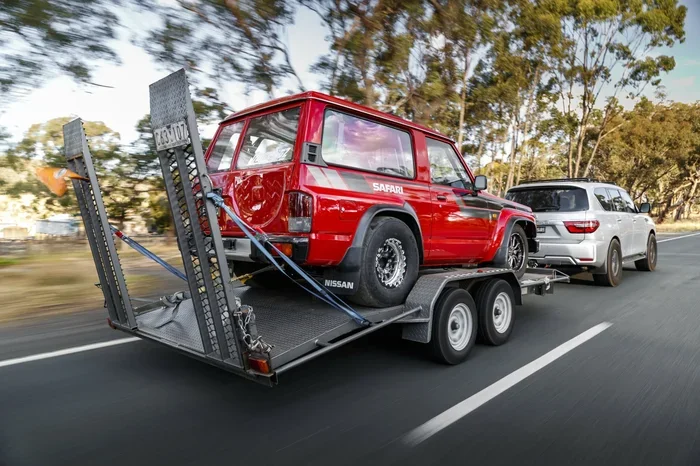
Can a Car Pull a Trailer Everything You Need to Know
Yes, a car can pull a trailer, but the real question is whether your specific vehicle is rated for the weight and type of trailer you plan to haul. Understanding towing capacity, trailer hitch requirements, and weight distribution is essential for safe and legal towing. This guide covers everything from gross vehicle weight rating to trailer brakes and towing safety so you can tow with confidence.
Key Takeaways
- Every car has limits: Check your vehicle’s towing capacity and gross vehicle weight rating before hauling any trailer.
- The right hitch matters: Different trailer hitch classes support different weight ranges, so choose wisely.
- Safety comes first: Proper weight distribution, trailer brakes, and towing mirrors are non-negotiable for safe towing.
- Practice makes perfect: Always test your setup in a safe area before hitting the open road.
- Know the regulations: Towing laws vary by state and country, so research local requirements before you go.
- Maintenance is key: Regularly inspect your towing equipment and vehicle before every trip.
📑 Table of Contents
- Can a Car Pull a Trailer? The Short Answer
- Understanding Towing Capacity and Weight Ratings
- Types of Trailer Hitches and Towing Equipment
- How to Safely Tow a Trailer with Your Car
- Common Towing Mistakes and How to Avoid Them
- What Kind of Trailer Can Your Car Handle?
- Final Thoughts on Towing with Your Car
Can a Car Pull a Trailer? The Short Answer
The short answer is yes. Most cars can pull a trailer of some kind. But the real question is whether your car can safely pull the trailer you have in mind. Towing isn’t one-size-fits-all. A compact sedan handles very differently than a full-size SUV. And a lightweight pop-up camper is worlds apart from a heavy horse trailer.
Before you hitch up and hit the road, you need to understand your vehicle’s limits. Every car comes with a towing capacity rating. This number tells you the maximum weight your vehicle can safely pull. Exceeding it can damage your engine, transmission, and brakes. It can also create dangerous driving conditions.
So let’s break this down. We’ll cover everything from towing capacity to trailer hitch types, from weight distribution to towing safety tips. By the end, you’ll know exactly what your car can handle and how to do it safely.
Whether you’re hauling a small utility trailer for a weekend project or planning a camping trip with a travel trailer, this guide has you covered. Let’s dive in.
Understanding Towing Capacity and Weight Ratings
What Is Towing Capacity?
Towing capacity is the maximum weight your vehicle can safely pull behind it. This number is set by the manufacturer based on engine power, transmission, frame strength, and braking capability. You can usually find this number on a sticker inside the driver’s door frame or in your owner’s manual.
But towing capacity isn’t the only number you need to know. There are several related weight ratings that all play a role in safe towing.
Key Weight Terms You Need to Know
Here are the most important weight terms every tow driver should understand:
- Gross Vehicle Weight Rating (GVWR): The maximum total weight of your vehicle plus passengers, cargo, and fuel.
- Gross Combined Weight Rating (GCWR): The maximum combined weight of your vehicle plus the trailer and everything loaded on it.
- Payload Capacity: The maximum weight your vehicle can carry in its cabin and cargo area, not including the trailer.
- Trailer Tongue Weight: The downward force the trailer puts on the hitch ball. This should typically be 10-15% of the total trailer weight.
- Curb Weight: The weight of your empty vehicle with standard equipment and fluids.
How to Find Your Vehicle’s Towing Numbers
Finding your vehicle’s towing specs is easier than you think. Start with the owner’s manual. It will list the towing capacity and all related weight ratings. You can also check the vehicle certification label on the driver’s door jamb. Many manufacturers also have online towing guides where you enter your vehicle details and get exact numbers.
Here’s a quick comparison of common vehicles and their typical towing capacities:
| Vehicle Type | Typical Towing Capacity | Best For |
|---|---|---|
| Compact Sedan | 1,000 – 1,500 lbs | Small utility trailers, bike racks |
| Mid-Size SUV | 3,500 – 5,000 lbs | Travel trailers, small boats |
| Full-Size Pickup Truck | 8,000 – 13,000 lbs | Large trailers, horse trailers, RVs |
| Minivan | 3,500 – 4,500 lbs | Small to medium travel trailers |
| Compact Car | 1,000 – 2,000 lbs | Light cargo trailers, jet skis |
These numbers vary widely by model, engine option, and towing package. Always check your specific vehicle’s rating. Don’t guess.
Types of Trailer Hitches and Towing Equipment
Understanding Trailer Hitch Classes
The trailer hitch is the connection point between your car and the trailer. Hitches come in five main classes, each rated for different weight ranges. Choosing the right one is critical for safety and performance.
Here’s a breakdown of the five hitch classes:
- Class I: Rated for up to 2,000 lbs. Best for small bike racks or lightweight cargo carriers.
- Class II: Rated for 2,000 – 3,500 lbs. Common on SUVs and minivans for small trailers.
- Class III: Rated for 3,500 – 5,000 lbs. The most versatile class. Fits many mid-size trucks and SUVs.
- Class IV: Rated for 5,000 – 10,000 lbs. Heavy-duty hitches for full-size trucks and large trailers.
- Class V: Rated for 10,000+ lbs. Commercial-grade hitches for the heaviest towing jobs.
Hitch Receivers and Accessories
Most hitches use a receiver tube that accepts various accessories. Common add-ons include weight distribution hitches, gooseneck adapters, and drawbar assemblies. A weight distribution hitch is especially important when towing heavier loads. It spreads the trailer tongue weight across all four wheels of your vehicle, improving stability and handling.
Essential Towing Equipment Checklist
Before every tow trip, make sure you have the right equipment. Here’s a quick checklist:
- A properly rated trailer hitch for your vehicle
- A ball mount and towing ball rated for the trailer weight
- Trailer wiring harness for brake lights and turn signals
- Towing mirrors for better rear visibility
- A brake controller if your trailer has electric brakes
- Safety chains crossed under the hitch
- A tongue jack to support the trailer when disconnected
Quick Tip: Always double-check that your hitch ball size matches the trailer coupler. A 2-inch ball won’t fit a 2-5/16-inch coupler, and vice versa. This is one of the most common and easily avoidable towing mistakes.
How to Safely Tow a Trailer with Your Car
Pre-Trip Inspection
Safety starts before you leave the driveway. A thorough pre-trip inspection can prevent accidents and breakdowns on the road. Here’s what to check every time:
- Tire pressure on both the vehicle and the trailer
- Trailer lights, brake lights, and turn signals
- Hitch connections and safety chains
- Tongue weight and overall load balance
- Fluid levels in your vehicle (oil, coolant, transmission)
- Brake function on both the vehicle and trailer
Loading the Trailer Correctly
How you load the trailer matters just as much as the hitch setup. Poorly loaded trailers cause trailer sway, which is one of the most dangerous towing situations. Trailer sway happens when the trailer starts swinging side to side, and it can be nearly impossible to correct at high speeds.
Follow these loading principles:
- Place heavier items forward of the trailer axle
- Distribute weight evenly from side to side
- Secure all cargo with straps or tie-downs
- Keep the total weight under your vehicle’s towing capacity
- Aim for 10-15% of the trailer weight as tongue weight
Driving with a Trailer
Driving while towing feels different. Your vehicle is longer, heavier, and less responsive. Adjust your driving habits accordingly.
Increase your following distance. Braking takes longer with a trailer. Reduce your speed, especially on curves and hills. Avoid sudden steering movements, which can trigger trailer sway. And always use your towing mirrors to see what’s happening behind you.
Expert Insight: Many experienced towers recommend practicing in an empty parking lot before your first real trip. Set up your trailer, practice turning, backing up, and emergency stops. This builds confidence and helps you understand how your vehicle and trailer behave as a unit.
Braking and Speed Management
Speed is the enemy of safe towing. The faster you go, the more unstable the trailer becomes. Most experts recommend staying at or below 55 mph when towing. This gives you more reaction time and reduces strain on your vehicle’s brakes and engine.
If your trailer weighs over 1,500 lbs, it likely needs its own brakes. A brake controller installed in your vehicle lets you apply the trailer brakes in sync with your vehicle’s brakes. This dramatically improves stopping power and control.
Common Towing Mistakes and How to Avoid Them
Overloading the Trailer
This is the number one mistake people make. It’s tempting to pack everything you own into a trailer, but exceeding the weight limit is dangerous. An overloaded trailer can cause the vehicle to lose traction, overheat the engine, and fail to brake properly. Always weigh your loaded trailer at a truck scale before hitting the road.
Ignoring Tongue Weight
Trailer tongue weight is the downward force the trailer puts on the hitch. Too little tongue weight and the trailer will sway. Too much and it will push the rear of your vehicle down, reducing steering control. The sweet spot is usually 10-15% of the total trailer weight.
Skipping the Towing Package
Many vehicles offer an optional towing package that includes upgraded cooling, stronger suspension, and a heavy-duty hitch receiver. If your vehicle is rated for towing but doesn’t have the package, you may be pushing it beyond its comfortable limits. The towing package exists for a reason. Invest in it.
Neglecting Maintenance
Towing puts extra stress on every part of your vehicle. Tires wear faster. Brakes work harder. The transmission runs hotter. Regular maintenance becomes even more important when you tow. Check your fluid levels, tire condition, and brake pads more frequently than you would without a trailer.
Forgetting About Regulations
Different states and countries have different towing regulations. Some require trailers over a certain weight to have their own brakes. Others have speed restrictions for towing vehicles. Some require specific safety equipment or mirror setups. Research the rules for every state or region you’ll be passing through.
What Kind of Trailer Can Your Car Handle?
Lightweight Trailers
Most cars can handle lightweight trailers. These include cargo trailers under 1,500 lbs, bike racks, and small utility trailers for hauling lawn furniture or gardening supplies. If your vehicle has a towing capacity above 1,500 lbs, a lightweight trailer should be well within your range.
Medium-Duty Trailers
Medium-duty trailers include small travel trailers, boat trailers, and enclosed cargo trailers in the 3,000-5,000 lb range. These typically require a mid-size SUV or a full-size car with a towing package. A weight distribution hitch is highly recommended for this weight class.
Heavy-Duty Trailers
Heavy-duty trailers like large RVs, horse trailers, and equipment trailers often exceed 7,000 lbs. These generally require a full-size pickup truck or a heavy-duty SUV with a Class IV or Class V hitch. Not every car can handle this level of towing, and that’s okay. Know your limits.
Matching Your Car to the Right Trailer
The best towing setup is one where the trailer weight is well within your vehicle’s rated capacity. As a rule of thumb, aim to use no more than 75-80% of your vehicle’s maximum towing capacity. This leaves a safety margin and reduces wear on your vehicle.
Here’s a simple guide to help you match your car with the right trailer type:
- Compact cars and sedans: Best with bike racks, small cargo trailers, and lightweight utility trailers under 1,500 lbs.
- Mid-size SUVs and crossovers: Handle travel trailers, small boats, and enclosed cargo trailers up to 5,000 lbs.
- Full-size trucks and heavy-duty SUVs: Can manage large travel trailers, horse trailers, and equipment trailers up to 10,000+ lbs.
Remember, these are general guidelines. Always check your specific vehicle’s towing capacity before making a decision.
Final Thoughts on Towing with Your Car
Can a car pull a trailer? Absolutely. But pulling a trailer safely requires knowledge, preparation, and respect for the limits of your vehicle. Understanding towing capacity, choosing the right trailer hitch, and following towing safety best practices will keep you and others safe on the road.
Take the time to learn your vehicle’s weight ratings. Invest in quality towing equipment. Practice before your first big trip. And never hesitate to ask for help at a truck stop or RV park if something doesn’t feel right. The towing community is generally very friendly and happy to share advice.
Towing opens up a world of possibilities. You can haul furniture, tow a boat to the lake, or travel across the country in a travel trailer. But it all starts with knowing your vehicle’s capabilities and staying within them. Do that, and you’ll enjoy every mile of the journey.
So go ahead. Plan that trip. Load up the trailer. Just make sure you do it the right way. Safe travels!
Frequently Asked Questions
What happens if you exceed your car’s towing capacity?
Exceeding your towing capacity puts extreme stress on your engine, transmission, and brakes. It can cause overheating, reduced braking performance, and even structural damage to your vehicle. More importantly, an overloaded setup is dangerous and can lead to loss of control while driving.
Do I need a special license to tow a trailer with my car?
In most cases, a standard driver’s license is sufficient for towing a trailer within common weight limits. However, some states and countries require a special endorsement or a commercial license for trailers over a certain weight. Always check local regulations before towing.
Can any car be equipped with a towing package?
Not every car comes with a towing package option. Many sedans and smaller vehicles are not designed for towing at all. Check your owner’s manual or contact the manufacturer to confirm whether your specific model supports a towing package.
How do I know if my trailer needs its own brakes?
In most regions, trailers over 1,500 lbs are required to have their own brakes. Some states require brakes on trailers over 3,000 lbs. Check your local towing regulations and always err on the side of caution when it comes to braking.
What is the best way to prevent trailer sway?
Proper loading is the best way to prevent trailer sway. Keep heavier items forward, distribute weight evenly, and maintain the correct tongue weight. A weight distribution hitch also helps significantly. If sway does occur, ease off the accelerator gently and avoid braking suddenly.
How often should I service my vehicle when I tow regularly?
If you tow frequently, you should service your vehicle more often than the standard maintenance schedule. Check your transmission fluid, engine coolant, and brake pads at least every 5,000 miles. Towing puts extra strain on every system, so proactive maintenance saves you from costly repairs.


2 Comments