My Car Wont Start but Has Power: Common Causes Explained
When your car won’t start but has power, it can be frustrating and confusing. The most common culprits include a weak battery, corroded connections, a faulty starter motor, or a bad ignition switch. This guide walks you through every possible cause, how to diagnose the problem, and what you can do to fix it yourself or when to call a pro.
There’s nothing worse than turning your key or pressing the start button and hearing nothing happen. Yet your dashboard lights are on. Your radio still works. Your car won’t start but has power. It’s a strange and annoying situation that leaves many drivers scratching their heads.
This problem is more common than you might think. In fact, it’s one of the top reasons people call roadside assistance. The good news? Most causes are easy to identify and fix. Whether it’s a simple battery issue or something more complex like a faulty starter motor, understanding the root cause helps you take the right next step.
In this guide, we’ll walk through every common reason your car won’t start but has power. We’ll cover symptoms to watch for, quick diagnostic tips, and practical fixes you can try at home. By the end, you’ll know exactly what’s going on and how to get back on the road.
Key Takeaways
- Battery issues are the #1 cause: A weak or dead battery often leaves your car with power but unable to start the engine.
- Corroded battery terminals matter: Loose or corroded connections can block electrical current even when the battery is fine.
- The starter motor could be to blame: A faulty starter motor or solenoid prevents the engine from cranking.
- Ignition switch failure is common: A bad ignition switch can stop the starting process while keeping your dashboard lights on.
- Try simple fixes first: Jump-starting, cleaning terminals, and checking the gear shift can solve many problems.
- Know when to call a mechanic: Persistent clicking, no response at all, or recurring issues need professional attention.
- Prevention saves money: Regular battery maintenance and clean connections help avoid future starting problems.
📑 Table of Contents
What Does “Car Won’t Start but Has Power” Mean?
When we say your car won’t start but has power, we mean the electrical systems are working. Your dashboard lights come on. The radio plays. The headlights shine bright. But the engine refuses to turn over or fire up. This is different from a completely dead battery, where nothing works at all.
Understanding the Symptoms
Pay close attention to what happens when you turn the key. Do you hear a single click? A rapid clicking sound? Complete silence? Each sound tells a different story about what’s going wrong inside your vehicle.
A single click often points to a starter motor problem. Rapid clicking usually means low battery voltage. And complete silence might indicate a faulty ignition switch or a bad neutral safety switch. These clues help you narrow down the cause fast.
Also notice whether your dashboard lights stay bright or seem dim when you try to start. Bright lights with no cranking suggest a starter issue. Dim lights with clicking suggest a battery problem. These small details matter a lot when diagnosing the issue.
Common Causes When Your Car Has Power But Won’t Start
Several components work together to start your engine. If even one part fails, you get power everywhere else but no crank. Let’s break down each possible cause in detail.
A Weak or Failing Battery
Your battery is the heart of your car’s electrical system. Even if your dashboard lights are on, the battery might not have enough juice to turn the engine over. A battery can appear charged on a voltmeter but still lack the cold cranking amps needed to start the engine.
Batteries typically last three to five years. Extreme weather speeds up wear. Hot summers and freezing winters are especially hard on battery health. If your battery is older than three years and your car won’t start but has power, the battery should be your first suspect.
Other signs of a weak battery include slow engine cranking, a swollen battery case, and a rotten smell near the battery terminals. If you notice any of these, get your battery tested right away at an auto parts store. Most places test it for free.
Corroded or Loose Battery Connections
Sometimes the battery itself is fine. The problem lies in the connections. Corroded or loose battery terminals can block electrical current from reaching the starter motor. This is one of the most overlooked causes of a car won’t start but has power situation.
You can often see corrosion as a white or bluish powdery buildup on the terminals. Loose connections wobble when you tug on them gently. Both issues prevent the full electrical current from flowing through the circuit.
The fix is simple. Disconnect the battery cables (negative first, then positive). Clean the terminals with a wire brush or a baking soda and water solution. Reconnect the cables tightly (positive first, then negative). This small step solves the problem more often than you’d think.
A Faulty Starter Motor
The starter motor is the heavy-duty electric motor that cranks your engine. When you turn the key, the starter engages and spins the engine until it fires. If the starter motor fails, you get power everywhere else but no engine cranking.
A bad starter motor often makes a single loud click when you turn the key. Sometimes you’ll hear a grinding noise. In rare cases, the starter just stops working with no sound at all. These are classic signs of starter motor failure.
Starter motors wear out over time, especially in high-mileage vehicles. Moisture and heat also damage them. Replacing a starter motor requires some mechanical skill, but it’s a repair many trusted shops handle quickly and affordably.
Bad Ignition Switch
The ignition switch controls the flow of electricity from the battery to the starter motor and engine. When this switch fails, it can interrupt the starting circuit while leaving other electrical systems working perfectly. This is why many drivers experience their car won’t start but has power issue.
Signs of a failing ignition switch include flickering dashboard lights, the engine stalling while driving, and difficulty turning the key. Some vehicles also show warning lights on the dashboard that come and go randomly.
Ignition switch problems are more common in older vehicles with traditional key ignitions. However, newer push-button start systems can also experience switch or sensor failures that cause similar symptoms.
Starter Relay Problems
The starter relay acts as a bridge between the ignition switch and the starter motor. It sends a strong electrical signal to engage the starter. When the relay goes bad, that signal never reaches the motor, and your engine won’t crank.
A failed starter relay often produces a rapid clicking sound when you turn the key. The clicking comes from the relay trying and failing to send power. This is different from the single click of a bad starter motor.
Replacing a starter relay is one of the cheapest and easiest fixes for a car won’t start but has power problem. The relay is usually located in the fuse box under the hood. You can swap it out with a matching relay in minutes.
Neutral Safety Switch Issues
The neutral safety switch prevents your car from starting unless the transmission is in Park or Neutral. When this switch fails, your engine simply won’t crank, even though everything else has power. This is a common cause that many drivers overlook.
You can test this by wiggling the gear shift while holding the key in the start position. If the engine starts after wiggling, the neutral safety switch is likely the culprit. This switch is located on the transmission and is relatively easy to replace.
Automatic and manual transmissions handle this differently. Manual cars have a clutch safety switch instead. Both serve the same purpose and can fail in similar ways.
Immobilizer System or Key Fob Battery
Modern vehicles have immobilizer systems that prevent the engine from starting without the correct key. If your key fob battery dies, the car’s computer might not recognize the key. You’ll have power everywhere, but the engine won’t start.
This is especially common with push-button start systems. The car doesn’t see the key fob nearby, so it refuses to crank. Try holding the key fob directly against the start button or the ignition slot. If it starts, the fob battery is dead and needs replacement.
Some vehicles also have a backup slot for the key fob built into the steering column or center console. Check your owner’s manual for the exact location. This simple trick gets you running when the fob battery dies.
How to Diagnose Why Your Car Won’t Start but Has Power
Diagnosing a no-start condition with power follows a logical process. Start with the simplest and most common causes and work your way toward the more complex ones. This saves time and money.
First, check your dashboard lights. Are they bright and full? Next, listen carefully when you turn the key. Do you hear clicking, silence, or a single loud click? Then, try turning the steering wheel slightly while turning the key. If the steering wheel is locked, it can prevent the ignition from turning.
Here’s a quick comparison of symptoms and likely causes:
| Symptom | Likely Cause | Fix Difficulty |
|---|---|---|
| Single loud click, no crank | Faulty starter motor or solenoid | Moderate |
| Rapid clicking, no crank | Weak battery or poor connections | Easy |
| Complete silence, no crank | Bad ignition switch or neutral safety switch | Moderate |
| Dashboard works, engine cranks but won’t fire | Fuel pump or spark plug issue | Harder |
| Push button doesn’t respond | Dead key fob battery | Very Easy |
This table helps you quickly identify the most probable cause based on what you hear and see. From there, you can decide whether to fix it yourself or visit a mechanic.
Quick Fixes You Can Try Right Now
Before you call for help, try these simple fixes. Many drivers solve the car won’t start but has power problem with these easy steps.
1. Try the key fob backup method. Hold the fob against the start button or ignition slot. This bypasses the dead fob battery and lets the car recognize the key.
2. Check the gear shift position. Make sure the car is fully in Park. Sometimes it doesn’t click all the way into Park, and the neutral safety switch won’t allow starting.
3. Turn the steering wheel gently while turning the key. This releases a locked steering column that can sometimes prevent the ignition from engaging.
4. Clean the battery terminals. Remove the cables, scrub the terminals with a wire brush, and reconnect them tightly. This solves many mysterious no-start issues.
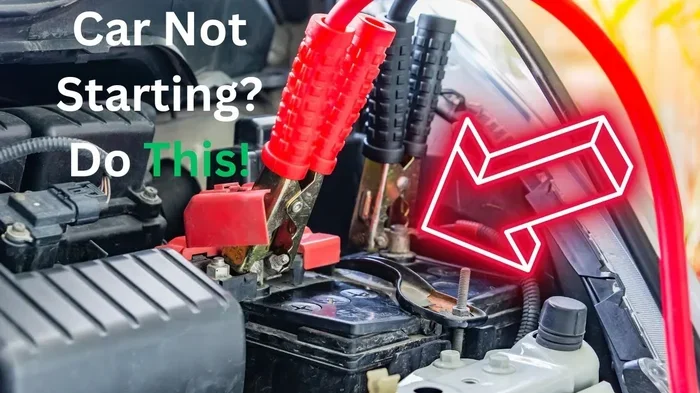
5. Give the battery a jump start. Use jumper cables and another vehicle or a portable jump starter. If the engine starts right away, your battery was simply too weak to crank the engine.
6. Tap the starter motor gently. Sometimes the starter motor’s internal brushes stick. A light tap with a wrench or hammer can free them up temporarily. This is a temporary fix, but it can get you to a shop.
Quick Tips
- Always keep a pair of jumper cables in your trunk. You never know when you’ll need them.
- Carry a portable jump starter. These small devices fit in the trunk and can start your car without another vehicle.
- Replace your key fob battery once a year. It’s cheap and prevents this exact problem.
- Check your battery age. If it’s over three years old, have it tested every six months.
When to Call a Professional Mechanic
Some starting problems are beyond DIY fixes. Knowing when to call for help saves you time, money, and frustration. If you’ve tried the basic checks and your car still won’t start but has power, it’s time to bring in the experts.
Call a mechanic right away if you notice any of the following: the engine cranks very slowly and won’t fire, you smell burning or electrical insulation, you see fluid leaks near the starter or battery, or the problem keeps coming back after you fix it temporarily.
Common Mistakes to Avoid
Many drivers make mistakes when dealing with a no-start condition. Here are the most common ones to avoid.
Don’t keep turning the key repeatedly. This drains your battery even further and can overheat the starter motor. Wait at least 30 seconds between attempts to let everything cool down.
Don’t ignore the problem. A car won’t start but has power issue rarely fixes itself. It usually gets worse over time. Addressing it early prevents more expensive repairs later.
Don’t assume it’s always the battery. While the battery is the most common cause, it’s not always the answer. Check connections, the starter, and the ignition switch before replacing parts.
Don’t work on the battery with loose jewelry. Rings and watches can cause short circuits. Remove all metal jewelry before touching battery terminals or electrical components.
Expert Insights
Experienced mechanics often say that 80% of no-start conditions with power come down to three things: the battery, the connections, and the starter motor. If you focus on those first, you’ll solve most problems quickly.
One veteran mechanic shared this tip: “When a customer says their car has power but won’t start, I always check the battery terminals first. Nine times out of ten, it’s corrosion or a loose cable. It takes two minutes to fix and saves the customer an expensive tow.”
Another common insight is to pay attention to patterns. Does the problem happen more in cold weather? That’s a battery issue. Does it happen after driving for a long time? That might point to an overheating ignition switch. Patterns give you valuable clues about the root cause.
Preventing Future Starting Problems
The best way to deal with a car won’t start but has power situation is to prevent it from happening in the first place. Regular maintenance goes a long way toward keeping your vehicle reliable.
Start with your battery. Have it tested at every oil change. Replace it every three to five years, even if it seems fine. Clean the terminals twice a year to prevent corrosion buildup. And keep your terminals tight and secure.
Next, pay attention to your key fob. Replace the battery once a year or when you notice the signal weakening. Keep a spare key fob in a safe place at home.
Also, don’t ignore warning signs. If your engine cranks slower than usual, or if your dashboard lights dim when you start the car, get it checked. These are early warning signs of battery or electrical system problems.
Finally, keep your vehicle well-maintained overall. Regular oil changes, spark plug replacements, and fuel filter changes keep the engine healthy and reduce the strain on the starting system. A well-maintained car starts reliably, day after day.
Conclusion
Dealing with a car won’t start but has power situation is frustrating, but it’s rarely a sign of a catastrophic problem. Most of the time, the cause is simple and fixable. Whether it’s a weak battery, corroded terminals, a faulty starter motor, or a dead key fob battery, the solutions are within reach.
Start with the basics. Check your battery, clean your connections, and make sure your car is in the right gear. These simple steps solve the majority of no-start problems. If the issue persists, use the diagnostic tips in this guide to narrow down the cause.
Remember, knowing your vehicle and understanding how it works gives you confidence. You don’t have to be a mechanic to handle most starting problems. With the right information and a little patience, you can get back on the road quickly and safely.
Take action today. Check your battery health, clean your terminals, and keep spare fob batteries on hand. These small habits prevent big headaches down the road. Your car deserves reliable care, and now you have the knowledge to give it exactly that.
Frequently Asked Questions
Why does my car have power but won’t start?
The most common reason is a weak battery, corroded terminals, or a faulty starter motor. Your electrical systems still work, but the engine can’t crank. Check your battery health and connections first, then move on to the starter and ignition switch.
Can a bad key fob battery cause a car not to start?
Yes, especially in vehicles with push-button start. If the key fob battery dies, the car’s computer can’t recognize the key. You’ll have power but no start. Hold the fob against the start button to bypass this temporarily.
How do I know if my starter motor is bad?
A bad starter motor usually makes a single loud click when you turn the key. The engine won’t crank at all. Sometimes you’ll also hear a grinding noise. A mechanic can test the starter with a multimeter to confirm the diagnosis.
Is it safe to keep trying to start my car when it won’t turn over?
No, repeated attempts drain your battery and can overheat the starter motor. Wait at least 30 seconds between attempts. If the car doesn’t start after three tries, check the battery and connections or call for help.
What should I do if my car clicks but won’t start?
A rapid clicking sound usually means your battery is low on charge. Try a jump start first. If that works, your battery needs charging or replacement. A single click often points to a faulty starter motor or solenoid.
How can I prevent my car from not starting in the future?
Replace your battery every three to five years, clean the terminals twice a year, keep a spare key fob battery on hand, and have your electrical system checked during regular maintenance. These simple habits prevent most no-start problems.
=== CONCLUSION ===
A car won’t start but has power is a common and usually solvable problem. The key is staying calm, checking the basics first, and working through the possible causes systematically. From battery health to starter motor condition, each component plays a role in getting your engine to turn over.
Use this guide as your go-to reference whenever you face this frustrating situation. The quick fixes and diagnostic tips help you take control and save money on repairs. And when the problem is beyond DIY, you’ll know exactly what to tell the mechanic.
Your vehicle is a big investment, and keeping it running smoothly starts with understanding how it works. Share this guide with friends and family who might benefit from it. Together, we can all become smarter, more confident car owners.