What Car Has the Most Horsepower Full Breakdown Now
The quest for the most horsepower has never been more exciting. From the Rimac Nevera with nearly 2,000 horsepower to the legendary Dodge Challenger SRT Demon 170, manufacturers are pushing power numbers to insane levels. In this full breakdown, we explore the cars that hold the top spots, explain what horsepower really means, and help you understand which high-power vehicle might be right for you.
Have you ever wondered what car has the most horsepower? It is a question that car enthusiasts love to debate. The answer might surprise you. Today, we are living in a golden age of power. Cars are faster, stronger, and more impressive than ever before. From electric hypercars to brute-force muscle cars, the horsepower race is wilder than it has ever been.
In this full breakdown, we will walk you through everything you need to know. We will look at the current horsepower kings. We will explain what horsepower really means and why it matters. We will also compare the top contenders and help you understand the difference between electric and gasoline power. Whether you are a gearhead or just curious, this guide has something for everyone.
The world of high-performance vehicles is constantly evolving. New models come out every year with bigger numbers and bold claims. But not all horsepower is created equal. Some cars deliver power smoothly. Others feel raw and explosive. Understanding these differences is key to appreciating what makes each vehicle special. So let us dive right in and explore the cars with the most horsepower on the planet.
Key Takeaways
- The Rimac Nevera currently holds the crown as one of the most powerful production cars ever built with 1,914 horsepower from its electric motors.
- Horsepower is not the only factor that matters. Torque, weight, and traction all play huge roles in how a car actually performs on the road.
- Electric vehicles are changing the horsepower game. EVs like the Lotus Evija and Rimac Nevera deliver instant power in ways gasoline engines cannot match.
- The Dodge Challenger SRT Demon 170 proves gasoline still has life. It delivers 1,025 horsepower from a supercharged V8 engine and remains a beast on the street.
- Choosing the right high-horsepower car depends on your needs. Consider daily drivability, budget, maintenance costs, and where you plan to drive.
- Horsepower wars are far from over. Manufacturers continue to push boundaries with new technologies and engineering tricks every year.
📑 Table of Contents
What Car Has the Most Horsepower?
When we talk about the car with the most horsepower, we are entering a world of extreme engineering. The answer depends on what type of car you are looking at. Are we talking about production cars? Concept vehicles? Electric vs. gasoline? Each category has its own champion. Let us break it down.
The Current Horsepower King
Right now, the Rimac Nevera sits at the top for many lists. This Croatian-made electric hypercar delivers 1,914 horsepower. That number comes from four electric motors working together. The result is breathtaking acceleration and mind-bending speed. The Nevera can go from zero to 60 miles per hour in under 1.8 seconds. That is faster than most fighter jets can accelerate on a runway.
But the Rimac Nevera is not the only contender. The Lotus Evija also packs a massive punch with 2,000 horsepower. It is an all-electric British hypercar that made waves when it was announced. Then there is the SSC Tuatara, which claimed over 1,750 horsepower from a twin-turbocharged V8 engine. The SSC Tuatara showed the world what a modern American hypercar can do.
On the gasoline side, the Dodge Challenger SRT Demon 170 stands out. It produces 1,025 horsepower from a supercharged 6.2-liter V8. That makes it the most powerful production muscle car ever built. It is a gasoline-powered giant that refuses to go quietly into retirement.
Why Horsepower Numbers Keep Climbing
You might wonder why car companies keep chasing higher numbers. The answer is simple. Competition. Every manufacturer wants to build the most powerful car in the world. This drives innovation. It pushes engineers to find new ways to squeeze every last bit of power from an engine or motor.
Technology has also played a huge role. Electric motors deliver power differently than combustion engines. They provide instant torque from zero RPM. This means electric cars can be incredibly quick without needing massive displacement. Turbocharging and supercharging have also evolved. Modern forced induction systems are more efficient than ever. They allow smaller engines to produce enormous power output.
Consumer demand plays a part too. Car buyers want excitement. They want to feel the rush of acceleration. High horsepower numbers sell cars. They grab attention. They create buzz. And in a crowded market, that buzz matters.
Understanding Horsepower: What It Really Means
Before we go further, let us make sure we all understand what horsepower actually is. The term horsepower dates back to the 1700s. James Watt, a Scottish engineer, coined it. He wanted to compare the power of steam engines to horses. He determined that one horsepower was roughly equal to the power a horse could sustain. That original measurement still forms the basis of how we rate engine power today.
In simple terms, horsepower measures how much work an engine can do over time. More horsepower means more potential speed and faster acceleration. But horsepower alone does not tell the whole story. You also need to think about torque. Torque is the twisting force that gets a car moving. Horsepower keeps it moving and pushes it to higher speeds. Both matter, but they serve different purposes.
Horsepower vs. Torque: What Is the Difference?
Think of torque as the raw muscle. It is the force that twists the wheels and gets the car rolling. A truck might have huge torque but modest horsepower. That is why trucks can haul heavy loads even if they are not the fastest vehicles on the road.
Horsepower, on the other hand, is about sustained work and speed. A high-horsepower sports car can reach incredible top speeds. It can accelerate hard at high RPMs. The best high-performance vehicles have both strong torque and high horsepower. This combination delivers the kind of driving experience that enthusiasts crave.
A good rule of thumb is this. Torque gets you off the line. Horsepower keeps you pushing at high speeds. If you want quick launches, look at torque figures. If you want top-end speed, focus on horsepower. The ideal car has a healthy balance of both.
Why Horsepower Ratings Vary
Here is something that surprises many people. The same car can have different horsepower numbers depending on how it is measured. Manufacturers test engines under different conditions. Some test at the crankshaft. Others measure at the wheels. The difference can be significant. A car rated at 700 horsepower at the crankshaft might only deliver 620 horsepower at the wheels.
Temperature, altitude, and humidity all affect engine output. A car tested on a cool day in Colorado might produce different numbers than the same car tested in Florida. This is why independent testing from places like Car and Driver or Motor Trend is so valuable. They provide real-world horsepower numbers that are more consistent.
Also, some manufacturers use conservative ratings. They understate horsepower to leave room for surprises. When a car exceeds its claimed numbers, that is a happy surprise for buyers. Other brands push the limits and sometimes make bold claims that are hard to verify independently. This is part of what makes the horsepower wars so fascinating.
Top Cars with the Most Horsepower
Let us get into the specifics. Here are the vehicles that currently hold the top spots for the highest horsepower in production cars. Each one represents a different approach to delivering massive power.
Rimac Nevera: The Electric Beast
The Rimac Nevera is a Croatian all-electric hypercar. It produces 1,914 horsepower from four individual electric motors. One motor drives each wheel. This setup allows for incredible traction and control. The Nevera can hit a top speed of 258 miles per hour. It is a car that was built from the ground up to be the fastest and most powerful road car possible.
What makes the Nevera special is how it delivers its power. Electric motors provide instant torque. There is no lag. No waiting for RPMs to build. The moment you press the accelerator, the power is there. This makes the Nevera feel almost otherworldly in its acceleration.
Lotus Evija: British Electric Power
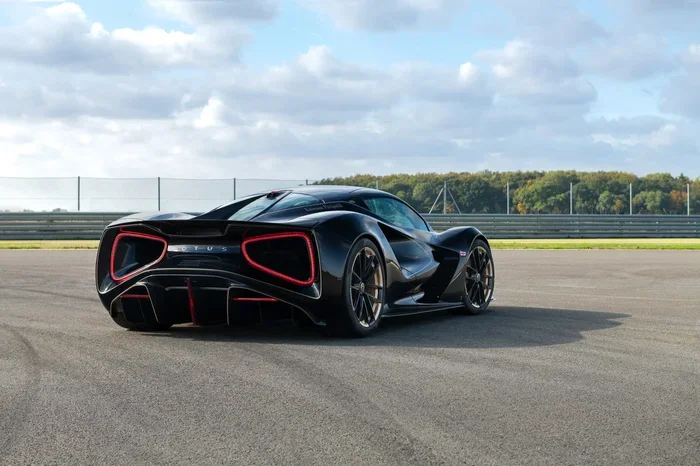
The Lotus Evija claims 2,000 horsepower, making it one of the most powerful cars ever made. It is a lightweight electric hypercar built by the legendary British brand. Lotus focused on keeping the weight down while maximizing the power output. The result is a car that is both incredibly fast and surprisingly agile.
The Evija uses a quad-motor setup similar to the Rimac Nevera. But Lotus engineered the entire car around the powertrain. The chassis, the aerodynamics, and the cooling systems all work together to support that massive power output. It is a masterclass in how to build a high-performance vehicle around an electric powertrain.
SSC Tuatara: American Hypercar Power
The SSC Tuatara is a mid-engine hypercar from Shelby SuperCars. It uses a twin-turbocharged 5.9-liter V8 engine that produces 1,750 horsepower on E85 fuel. On regular pump gas, it still delivers an impressive 1,350 horsepower. The Tuatara was designed to be a world-class speed machine, and its numbers reflect that ambition.
SSC built the Tuatara with aerodynamics in mind. The body shape is designed to reduce drag and increase downforce. This allows the car to remain stable at very high speeds. The combination of massive horsepower and smart aerodynamics makes the Tuatara a serious contender for the fastest production car title.
Dodge Challenger SRT Demon 170: The Gasoline Giant
The Dodge Challenger SRT Demon 170 proves that gasoline engines still have a place in the horsepower arms race. It produces 1,025 horsepower from a supercharged 6.2-liter V8 engine. That makes it the most powerful production muscle car ever made. The Demon 170 is a street-legal drag strip terror.
What makes the Demon 170 special is its accessibility. You do not need a special track license to buy one. It is a production car you can register and drive on public roads. That does not mean it is easy to handle. The sheer amount of power can overwhelm even experienced drivers. But for those who want raw American muscle, nothing else comes close.
Horsepower Wars: How Manufacturers Push the Limits
The competition to build the most powerful car has been going on for decades. This ongoing battle is often called the horsepower wars. It has driven some of the most incredible engineering feats in automotive history. Let us look at how we got here and where things are heading.
The Rise of the Muscle Car Era
The horsepower wars really took off in the 1960s and 1970s. American manufacturers like Dodge, Chevrolet, and Ford were locked in a battle for supremacy. The Dodge Charger, the Chevrolet Chevelle SS, and the Ford Mustang GT all became icons of this era. These muscle cars were built for straight-line speed and brute force.
During this time, horsepower numbers were modest by today standards. A typical muscle car might produce 300 to 450 horsepower. But that was enough to make them legends. The culture around these cars created a lasting passion for high-performance vehicles that continues to this day.
Modern Hypercar Competition
Today, the horsepower wars have reached a new level. Hypercar manufacturers from Europe, America, and Asia are all competing for the top spot. Companies like Rimac, Koenigsegg, Bugatti, and SSC are all pushing the boundaries of what is possible.
Koenigsegg, for example, has built cars like the Jesko Absolut, which is rated at 1,600 horsepower. Bugatti’s Chiron Super Sport 300+ reached 1,578 horsepower and famously broke the 300-mile-per-hour barrier. These cars represent the pinnacle of internal combustion engineering. They are masterpieces of power and performance.
Meanwhile, electric vehicle startups like Rimac are rewriting the rules entirely. Their cars deliver power in ways that gasoline engines simply cannot. Instant torque, seamless power delivery, and incredible efficiency give EVs a unique advantage. The horsepower wars have entered a new chapter, and electric power is leading the charge.
Electric vs. Gasoline Horsepower
The debate between electric and gasoline horsepower is one of the most interesting topics in the automotive world today. Both types of power have strengths and weaknesses. Understanding these differences helps explain why the most powerful cars today are increasingly electric.
How Electric Motors Deliver Power
Electric motors are fundamentally different from gasoline engines. A traditional car engine burns fuel to create controlled explosions. These explosions push pistons. The pistons turn a crankshaft. That rotational force is what we call horsepower. It is a complex process with many moving parts.
An electric motor works in a completely different way. It uses electromagnetic fields to create rotational force. There are no explosions. No pistons. No complex transmission systems. The result is power that is delivered instantly and efficiently. When you press the accelerator in an electric car, the full power is available immediately.
Why Electric Horsepower Is Different
Electric horsepower feels different from gasoline horsepower. The instant torque delivery makes electric cars feel incredibly responsive. There is no waiting for the engine to rev up. The power is there from the moment you touch the pedal.
Electric motors are also more efficient. A gasoline engine wastes a lot of energy as heat. An electric motor converts most of its energy directly into motion. This efficiency means that electric cars can produce more usable horsepower from a smaller and lighter package. That is why the most powerful production cars today are electric.
However, gasoline engines still have their advantages. They can achieve very high top speeds. They offer a sensory experience that many enthusiasts love. The sound, the smell, the vibration of a powerful V8 engine is something electric cars cannot replicate. For now, both types of power have a place in the automotive world.
How to Choose the Right High-Horsepower Car
If you are considering a high-horsepower vehicle, there are several factors to think about. More power is not always better. The right car depends on your needs, your budget, and your driving goals. Let us walk through what to consider.
Consider Your Driving Needs
Think about how you will actually use the car. Are you planning to drag race on weekends? Do you want a daily driver that is also fast? Are you looking for a track weapon? Your intended use should guide your choice.
A car like the Dodge Challenger SRT Demon 170 is built for straight-line acceleration. It is a drag strip specialist that happens to be street legal. If you want a car for canyon carving or track days, you might prefer something like the Lotus Evija. It offers a more balanced driving experience with its lightweight chassis and responsive handling.
Think About Practicality
High-horsepower cars are not always practical. Many of them have low ground clearance. Limited cargo space. Tight interiors. If you need a car for daily errands or family trips, you might want to consider a high-performance SUV or a more practical sports car. Brands like Porsche and Audi offer vehicles that deliver serious horsepower while still being usable for everyday life.
Maintenance costs are another important factor. High-performance cars require specialized care. Tires wear out quickly. Brake pads need frequent replacement. Insurance costs can be higher. Make sure you factor these expenses into your decision before you buy. A car that is thrilling to drive can become expensive to maintain if you are not prepared.
Budget and Value
The most powerful cars in the world are also the most expensive. The Rimac Nevera costs over 2 million dollars. The Lotus Evija is similarly priced. Even the Dodge Challenger SRT Demon 170 starts at over 100,000 dollars. If you are on a tighter budget, there are still plenty of options that deliver exciting horsepower at more accessible prices.
Cars like the Ford Mustang GT, the Chevrolet Camaro SS, and the BMW M4 offer strong performance at a fraction of the cost of a hypercar. You might not have 700 or 800 horsepower, but you will still have a thrilling driving experience. Sometimes the best car is not the most powerful one. It is the one that fits your life and your budget.
Conclusion
The answer to what car has the most horsepower depends on the category and the type of power you are looking at. The Rimac Nevera and Lotus Evija represent the peak of electric horsepower with nearly 2,000 horsepower each. The SSC Tuatara and Koenigsegg Jesko show what modern combustion engines can achieve. And the Dodge Challenger SRT Demon 170 proves that gasoline muscle is still alive and well.
The horsepower wars are not slowing down. New technologies are making it possible to build cars that are faster and more powerful than ever before. Electric motors are changing the game. Advanced forced induction systems are pushing gasoline engines to new limits. And the competition between manufacturers ensures that the pursuit of more power will continue for years to come.
Whether you are a car enthusiast or simply curious about the fastest vehicles on the road, understanding horsepower is key. It is not just about a number on a spec sheet. It is about the experience of driving. It is about the thrill of acceleration and the joy of being behind the wheel of a truly powerful machine. The cars with the most horsepower remind us why we love cars in the first place. They represent the absolute peak of what human engineering can achieve.
So the next time someone asks you what car has the most horsepower, you will have a great answer. And more importantly, you will understand why that number matters and what it takes to achieve it. The world of high-performance vehicles is exciting, diverse, and always evolving. There has never been a better time to be a car enthusiast.
Frequently Asked Questions
What is the most powerful production car in the world?
The Rimac Nevera is widely considered the most powerful production car currently available. It produces 1,914 horsepower from its four electric motors. However, the Lotus Evija claims 2,000 horsepower, so the title depends on how you measure and verify the numbers.
How much horsepower does a Dodge Challenger SRT Demon 170 have?
The Dodge Challenger SRT Demon 170 produces 1,025 horsepower from its supercharged 6.2-liter V8 engine. That makes it the most powerful production muscle car ever built. It is a gasoline-powered powerhouse that still competes with modern electric hypercars.
Is electric horsepower better than gasoline horsepower?
Electric horsepower offers instant torque and seamless delivery. It is more efficient and lighter than a comparable gasoline powertrain. However, gasoline engines still offer a unique sensory experience and can achieve incredible top speeds. Both have their strengths depending on what you value in a car.
Can you drive the most powerful cars on public roads?
Yes, cars like the Rimac Nevera, Dodge Challenger SRT Demon 170, and Lotus Evija are all street-legal production vehicles. They are designed to be driven on public roads as well as on tracks. However, handling that much power responsibly requires skill and experience.
Why do some cars have different horsepower numbers than others of the same model?
Horsepower ratings can vary based on testing conditions, fuel type, and measurement methods. Some manufacturers test at the crankshaft while others measure at the wheels. Temperature, altitude, and fuel quality also affect output. This is why independent testing is so valuable for getting accurate numbers.
What should I look for when buying a high-horsepower car?
Consider your driving needs, budget, and how practical the car needs to be. Think about maintenance costs, insurance, and whether you plan to use it daily or for special occasions. Test drive multiple cars if possible. The best high-horsepower car is one that fits your lifestyle and feels right to drive.