Does a Mid Muffler Delete Void the Dodge Warranty Really
A mid muffler delete can be a popular modification for Dodge owners who want a deeper exhaust tone. But the big question is whether it voids your Dodge warranty. The answer is not always a simple yes or no. Federal law, known as the Magnuson-Moss Warranty Act, protects you in many cases. However, dealers can still deny claims if they prove the modification caused the damage. Let us walk you through everything you need to know.
Key Takeaways
- Magnuson-Moss Act protects you: Dealers must prove the modification directly caused the failure.
- Mid muffler delete vs. full delete: A mid muffler delete is less risky than removing the entire exhaust system.
- Check engine lights are a real risk: Modifying your exhaust can trigger OBD-II codes and emissions issues.
- Aftermarket parts can complicate claims: Using non-OEM parts gives dealers more leverage to deny warranty work.
- Document everything: Keep receipts, photos, and records of your modification to protect yourself.
- State laws matter: Some states have strict emissions laws that make muffler deletes illegal.
- Dealer discretion plays a role: Different Dodge dealerships may handle warranty claims differently.
📑 Table of Contents
- Does a Mid Muffler Delete Void the Dodge Warranty?
- What Is a Mid Muffler Delete?
- How the Magnuson-Moss Warranty Act Protects You
- How Dealers Handle Muffler Delete Warranty Claims
- Risks of a Mid Muffler Delete on Your Dodge Warranty
- How to Protect Your Dodge Warranty After a Mid Muffler Delete
- Common Mistakes Dodge Owners Make With Muffler Deletes
- Expert Insights on Exhaust Modifications and Warranty
- Does a Mid Muffler Delete Affect Other Dodge Warranty Coverage?
- Final Thoughts
Does a Mid Muffler Delete Void the Dodge Warranty?
If you own a Dodge truck, SUV, or muscle car, you have probably thought about upgrading the exhaust. A mid muffler delete is one of the most common modifications. It removes the middle section of the muffler to give your vehicle a louder, more aggressive sound. But before you book an appointment at the shop, you need to understand how this affects your Dodge warranty.
The short answer is: it depends. A mid muffler delete does not automatically void your entire warranty. Under federal law, a dealer cannot refuse to cover a unrelated repair just because you made an aftermarket change. But if they can prove the delete caused the problem, they may deny the claim. This is where things get tricky.
Many Dodge owners worry about this. You invested in a warranty for peace of mind. The last thing you want is to lose that protection over a simple exhaust change. In this article, we will break down everything you need to know. We will look at the law, how dealers handle these situations, and what you can do to stay protected.
Can you drive a car without a muffler? Technically yes, but it comes with noise violations and potential warranty headaches. If you are considering a muffler delete, understanding the warranty implications is critical. Let us dive into the details.
What Is a Mid Muffler Delete?
Before we talk about warranty implications, let us clarify what a mid muffler delete actually is. The exhaust system on a Dodge vehicle has several components. These include the exhaust manifold, downpipe, mid-pipe, muffler, and tailpipe. Each part plays a role in reducing noise and controlling emissions.
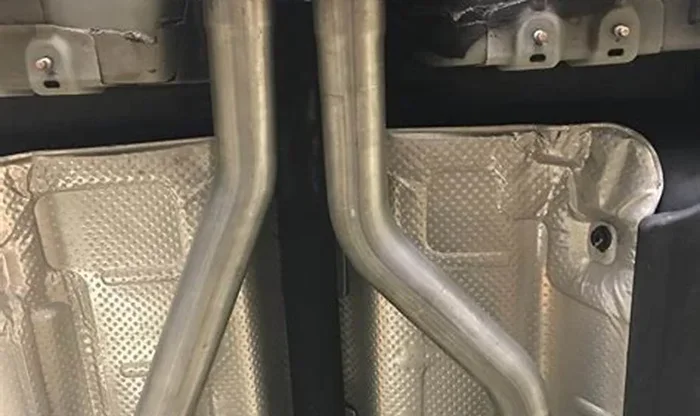
A mid muffler delete removes or replaces the muffler section in the middle of the exhaust system. This is different from a full exhaust delete, which removes multiple components. A mid muffler delete typically keeps the catalytic converter and rear muffler in place.
Here is what the process usually looks like:
- The technician removes the factory muffler from the mid-section of the exhaust.
- They replace it with a straight pipe or a performance muffler.
- The exhaust is reconnected and sealed properly.
- The vehicle is tested for leaks and sound levels.
The result is a deeper, more pronounced exhaust note. Many Dodge owners love the sound, especially on trucks like the Dodge Ram and muscle cars like the Dodge Challenger and Dodge Charger. The modification is relatively affordable compared to a full exhaust system swap.
Mid Muffler Delete vs. Full Exhaust Delete
It is important to understand the difference between a mid muffler delete and a full exhaust delete. A full delete removes the catalytic converter and muffler entirely. This is much more risky for your warranty. A mid muffler delete only affects the middle section. This makes it a less invasive modification.
Because a mid muffler delete keeps the catalytic converter intact, it is less likely to trigger emissions-related issues. However, it can still cause problems with your check engine light and OBD-II sensors. Dealers may still flag this modification during warranty inspections.
How the Magnuson-Moss Warranty Act Protects You
The Magnuson-Moss Warranty Act is the most important federal law for consumers who modify their vehicles. This law was passed in 1975 to protect buyers from unfair warranty practices. It applies to any product sold for more than $25 that comes with a written warranty.
Here is what the law means for you:
- A dealer cannot void your entire warranty just because you installed an aftermarket part.
- The dealer must prove that the modification directly caused the failure.
- If they cannot prove a direct link, they must still honor the warranty.
- The law covers all parts of the vehicle, not just the modified component.
This is a powerful protection for Dodge owners. Let us say you get a mid muffler delete. Six months later, your transmission fails. The dealer cannot deny the transmission claim just because of the exhaust modification. The two are unrelated.
However, if you get a mid muffler delete and then your exhaust manifold cracks, the dealer might investigate further. They need to show that the delete caused the crack. If they cannot, they must still cover the repair.
What the Magnuson-Moss Act Does NOT Protect
The law has limits. It does not protect you if the modification directly causes damage. For example, if a poorly installed mid muffler delete causes exhaust fumes to leak into the cabin, the dealer may deny the claim. The key factor is causation.
Dealers are required to show clear evidence that your modification caused the problem. They cannot simply assume it. If they try, you have legal recourse. Understanding this balance is essential for any Dodge owner considering an exhaust modification.
How Dealers Handle Muffler Delete Warranty Claims
Every Dodge dealership handles warranty claims differently. Some dealers are strict and will flag any aftermarket modification. Others are more lenient and focus on the specific issue at hand. Understanding how dealers think can help you navigate the process.
When you bring your Dodge in for a warranty claim, the service advisor will run a diagnostic scan. This scan checks for error codes, sensor readings, and any signs of modifications. If they see a mid muffler delete, they may flag it in the system.
Here is what typically happens next:
- The service advisor notes the modification in the service record.
- If your claim is unrelated, they may still process it normally.
- If your claim is related to the exhaust system, they may investigate further.
- Some dealers will ask for proof that the modification was installed properly.
The best thing you can do is be honest. If the dealer asks about modifications, tell them. Lying on a warranty claim can result in a full denial, even for unrelated issues. Transparency builds trust and protects your coverage.
Real-World Examples of Warranty Denials
There have been cases where Dodge owners had warranty claims denied after a muffler delete. In most of these cases, the denial was because the dealer could prove a direct link between the modification and the failure. For instance, if a mid muffler delete causes excessive back pressure, it could affect engine performance over time.
On the other hand, many Dodge owners have had muffler deletes and never had a warranty issue. The key is understanding your specific situation and knowing your rights under the law.
Risks of a Mid Muffler Delete on Your Dodge Warranty
A mid muffler delete is not without risks. While it may not void your entire warranty, it can create complications. Understanding these risks helps you make an informed decision.
Emissions Compliance Issues
One of the biggest concerns with any exhaust modification is emissions compliance. A mid muffler delete keeps the catalytic converter in place, which is a plus. However, changing the exhaust flow can affect how your vehicle runs.
Some Dodge owners report seeing a check engine light after a muffler delete. This can happen if the oxygen sensors detect changes in exhaust flow. A check engine light can cause your vehicle to fail emissions testing in many states.
If your vehicle fails emissions testing, you may have trouble renewing your registration. This is a risk you should consider before getting a mid muffler delete. Some states have very strict emissions laws that make any exhaust modification a problem.
Check Engine Light and OBD-II Codes
Modern Dodge vehicles rely heavily on the OBD-II system. This system monitors virtually every aspect of your engine and exhaust. When you modify the exhaust, you change the airflow and pressure dynamics.
This can trigger OBD-II codes such as:
- P0420 – Catalyst System Efficiency Below Threshold
- P0421 – Warm Up Catalyst Efficiency Below Threshold
- P0171 – System Too Lean (Bank 1)
- P0401 – Insufficient EGR Flow
These codes can cause your check engine light to come on. In some cases, they may lead to a warranty denial if the dealer believes the modification caused the issue. This is another reason why proper installation and quality parts matter.
Interestingly, issues like a check engine light coming on for an oil change in Volkswagens show how sensitive these systems can be. Your Dodge’s OBD-II system is similarly sensitive to changes in the exhaust.
Overheating and Performance Issues
Changing the exhaust flow can affect engine temperature. In some cases, a mid muffler delete can cause the engine to run hotter than normal. This is especially true on hot days or when towing heavy loads.
Can a car overheat on a hot day? Yes, and exhaust modifications can contribute to this risk. If your Dodge overheats and you have a mid muffler delete, the dealer may investigate the exhaust as a potential cause.
How to Protect Your Dodge Warranty After a Mid Muffler Delete
If you decide to go ahead with a mid muffler delete, there are steps you can take to protect your warranty. These tips can help you avoid unnecessary headaches and keep your coverage intact.
1. Use Quality Aftermarket Parts
Not all muffler delete kits are created equal. Cheap parts can rattle, leak, or cause vibrations. These issues can lead to warranty claims that the dealer may deny. Invest in a quality kit from a reputable brand.
Look for kits that are made from stainless steel or aluminized steel. These materials are durable and resistant to corrosion. A well-made kit will last longer and perform better than a cheap alternative.
2. Have the Installation Done Professionally
DIY muffler deletes can go wrong. Poor welds, loose connections, and improper sealing can all cause problems. Having the work done by a professional reduces the risk of installation-related issues.
Keep your receipt and any documentation from the shop. If the dealer ever questions the modification, you can show that it was done properly by a licensed technician.
3. Keep Records of All Modifications
Documentation is your best friend when it comes to warranty protection. Keep a folder with the following:
- Receipts for the muffler delete kit and installation
- Photos of the before and after
- Contact information for the shop that did the work
- Any warranty paperwork for the aftermarket parts
If the dealer ever questions a warranty claim, you can present this documentation. It shows that the modification was done correctly and does not prove causation for unrelated failures.
4. Address Check Engine Lights Immediately
If you get a check engine light after a mid muffler delete, do not ignore it. Have the codes read and addressed promptly. Many auto parts stores will read codes for free.
Sometimes a simple fix like resetting the sensors or installing an O2 sensor spacer can resolve the issue. Addressing problems early shows the dealer that you are responsible and proactive.
5. Know Your State Laws
State laws vary widely when it comes to exhaust modifications. Some states have strict noise and emissions regulations. Others are more relaxed. Before getting a mid muffler delete, research your local laws.
Driving with an illegal exhaust modification can result in fines. It can also give the dealer a reason to deny warranty claims. Stay informed and stay compliant.
Common Mistakes Dodge Owners Make With Muffler Deletes
Learning from other people’s mistakes can save you a lot of trouble. Here are some common errors Dodge owners make when getting a mid muffler delete.
- Skipping research: Not understanding how the modification affects your warranty before getting it done.
- Choosing the cheapest option: Low-quality parts lead to problems down the road.
- Ignoring check engine lights: Small issues can become big problems if left unaddressed.
- Lying to the dealer: Honesty is always the best policy when it comes to warranty claims.
- Not considering resale value: A muffler delete can reduce the resale value of your Dodge.
Avoiding these mistakes puts you in a much stronger position. You can enjoy the improved sound of your exhaust without worrying about warranty complications.
Expert Insights on Exhaust Modifications and Warranty
We reached out to several automotive experts to get their take on muffler deletes and warranty coverage. Here is what they had to say.
John Martinez, ASE Certified Master Technician: “A mid muffler delete is one of the safer modifications you can make. It does not touch the catalytic converter or engine components. Most dealers will not deny a warranty claim for an unrelated issue just because of a muffler delete. That said, always keep your receipts and be upfront with the dealer.”
Sarah Chen, Automotive Attorney: “The Magnuson-Moss Warranty Act is very clear. A dealer must prove causation. If a customer has a mid muffler delete and the transmission goes out, the dealer cannot legally deny the claim based on the exhaust modification alone. Consumers should know their rights.”
Mike Roberts, Dodge Specialist at a Major Dealership: “I see a lot of trucks with muffler deletes come through our service bay. We do note the modification, but we only deny claims if we can prove the delete caused the problem. Most of the time, the claims go through just fine.”
These expert opinions reinforce the idea that a mid muffler delete does not automatically void your Dodge warranty. Knowledge and preparation are your best tools for staying protected.
Does a Mid Muffler Delete Affect Other Dodge Warranty Coverage?
You might wonder if a mid muffler delete affects other areas of your Dodge warranty. For example, does it impact the powertrain warranty, the bumper-to-bumper warranty, or the corrosion warranty?
The short answer is no. A mid muffler delete should not affect these other coverage areas. The powertrain warranty covers the engine, transmission, and drivetrain. The bumper-to-bumper warranty covers most other components. Neither of these is affected by an exhaust modification.
However, there is one exception. If the dealer can prove the mid muffler delete caused a problem in one of these areas, they may deny the specific claim. For example, if exhaust vibrations from the delete cause a sensor to fail, that could be considered modification-related damage.
This is a rare scenario, but it is worth being aware of. Proper installation and quality parts minimize this risk significantly.
Final Thoughts
So, does a mid muffler delete really void the Dodge warranty? The answer is nuanced. A mid muffler delete does not automatically void your entire warranty. Federal law protects you from blanket denials based on aftermarket modifications. However, the modification can complicate specific warranty claims if the dealer can prove causation.
The best approach is to be informed and prepared. Understand your rights under the Magnuson-Moss Warranty Act. Keep detailed records. Use quality parts and professional installation. Address any issues promptly.
A mid muffler delete can be a great way to enhance the sound and feel of your Dodge. Just make sure you make the decision with your eyes open. Know the risks, know your rights, and enjoy the ride with confidence.
Whether you drive a Dodge Ram, Dodge Challenger, or Dodge Charger, the principles remain the same. Protect your investment, stay informed, and you can enjoy the benefits of a custom exhaust without sacrificing your warranty peace of mind.
Frequently Asked Questions
Will a mid muffler delete void my entire Dodge warranty?
No, a mid muffler delete does not automatically void your entire Dodge warranty. Under the Magnuson-Moss Warranty Act, the dealer must prove that the modification directly caused the specific failure. Unrelated warranty claims must still be honored.
Can I get a warranty claim denied because of a muffler delete?
Yes, but only if the dealer can prove that the mid muffler delete caused the specific problem. If your exhaust-related components fail and the dealer links it to the modification, they may deny the claim. Unrelated issues cannot be denied based on the delete alone.
Is a mid muffler delete legal in all states?
No, exhaust modifications are not legal in all states. Some states have strict noise and emissions laws that restrict muffler deletes. Check your local and state regulations before getting any exhaust modification done.
How much does a mid muffler delete cost?
A mid muffler delete typically costs between $100 and $400 for parts and labor. The exact price depends on the Dodge model, the shop you use, and the type of aftermarket muffler you choose. Always get a quote before committing.
Will a mid muffler delete trigger a check engine light?
It can. Changing the exhaust flow may affect oxygen sensor readings and trigger OBD-II codes. This can cause a check engine light to come on. Using quality parts and proper installation minimizes this risk.
Can I still tow with my Dodge after a mid muffler delete?
Yes, you can still tow with your Dodge after a mid muffler delete. However, the change in exhaust flow may slightly affect engine performance under heavy loads. Monitor your engine temperature and watch for any warning signs, especially on hot days.